

Data has become one of the most valuable resources for businesses, researchers, students, marketers, and everyday professionals. However, having large amounts of information is not enough to produce useful insights. Raw datasets often contain patterns, trends, inconsistencies, and relationships that can be difficult to identify manually. This is where artificial intelligence is changing the way people approach analytical work. Modern AI-powered systems can process large volumes of information, organize complicated datasets, recognize meaningful patterns, and present findings in a much easier form.
The growing interest in AI data analysis is closely connected with the need for faster and more reliable decision-making. Instead of spending hours sorting information through spreadsheets or manually comparing individual records, users can increasingly rely on intelligent tools to support the analytical process. deepseekplay com represents this broader approach by bringing AI-assisted capabilities into workflows where understanding information quickly can make a significant difference. The real value is not simply processing more data, but turning complicated information into insights that people can understand and use.
Understanding AI-Powered Data Analysis
Traditional data analysis generally involves collecting information, cleaning it, organizing it, applying calculations, and then interpreting the results. While this process remains important, artificial intelligence can assist with several stages simultaneously. An AI-based analytical system can examine relationships within information, identify unusual values, summarize large datasets, and help users understand what the numbers may indicate. This can be especially useful when datasets are too large or complicated to examine efficiently by hand.
AI data analysis does not necessarily replace human judgment. Instead, it can act as an analytical assistant that reduces repetitive work and helps users focus on interpretation. For example, a business owner might have several months of sales information containing product categories, customer behavior, seasonal changes, and regional performance. Rather than manually comparing every category, an AI system can help identify which products are growing, which periods are performing unusually well, and where potential problems may exist.
The effectiveness of AI depends heavily on the quality of the information being analyzed. Incorrect, incomplete, outdated, or poorly structured data can lead to misleading conclusions. Therefore, users should still review their datasets and evaluate AI-generated findings carefully. The strongest approach combines automated analysis with human verification, domain knowledge, and logical reasoning.
How deepseekplay com Can Support Clearer Data Interpretation
A major challenge with data is that information can become difficult to understand when it is presented without context. Tables containing hundreds or thousands of rows may technically contain useful answers, but finding those answers manually can consume considerable time. AI-assisted analysis can make this process more accessible by transforming complicated information into summaries and explanations that are easier to follow.
deepseekplay com can be considered useful within this type of workflow because AI-based analysis can help users move from raw information toward understandable conclusions. Instead of simply looking at isolated figures, users can examine relationships between different variables and consider what those relationships might mean. For instance, if website traffic increases while conversions decline, the important question is not simply whether traffic increased. The more useful analysis involves examining why visitors may not be completing the desired action.
This kind of interpretation can be valuable across many fields. A marketing professional could analyze campaign performance, while a researcher might compare experimental observations. A student could organize research data, and a company manager could examine operational performance. In each case, the goal is similar: make complex information easier to understand without losing the important details behind it.
Identifying Patterns and Trends More Efficiently
One of the most useful applications of artificial intelligence in analytics is pattern recognition. Human analysts can identify trends, but large datasets can make subtle relationships difficult to notice. AI systems can examine many variables at once and highlight changes that deserve further investigation.
Imagine an online retailer reviewing two years of sales information. The overall sales figure may look positive, but a deeper examination could reveal that certain products perform strongly only during particular months. Another product may have declining sales despite receiving more advertising exposure. A third category might show steady growth in a specific customer segment. These patterns can be difficult to identify when information is spread across multiple files or reports.
AI-supported analysis can help bring such relationships to the surface. However, recognizing a pattern does not automatically explain its cause. Users should investigate the surrounding circumstances before treating a correlation as a definite explanation. This distinction is particularly important because data can show that two things happen together without proving that one directly causes the other.
Turning Complex Information Into Practical Insights
The purpose of data analysis is ultimately to support better understanding and action. A report filled with numbers may be technically accurate but still fail to help the person reading it. Clear interpretation is therefore just as important as calculation.
AI can assist by summarizing analytical results in natural language. Instead of presenting only a complicated spreadsheet, an AI-supported workflow can help explain which values changed significantly, where unusual activity occurred, and which areas may require additional attention. This can make analytical information more accessible to people who are not professional data scientists.
For example, a manager may not need to understand every mathematical operation used to analyze customer activity. What they may need is a clear explanation that customer retention improved among one group while declining among another. That information can then lead to more specific questions about pricing, service quality, product satisfaction, or customer communication.
deepseekplay com fits into this wider movement toward making sophisticated analytical capabilities more approachable. The emphasis is on helping users understand information rather than forcing every user to become an expert in complex analytical techniques.
AI Data Analysis Across Different Use Cases
Artificial intelligence can support analytical tasks in many professional and educational environments. The exact workflow depends on the type of information being examined, but the underlying objective remains the same: transform data into useful understanding.
| Use Case | Data Being Examined | Potential Analytical Benefit |
|---|---|---|
| Business | Sales and revenue records | Identifying growth and weak-performing areas |
| Marketing | Campaign and audience data | Comparing engagement and conversion patterns |
| Research | Survey or experimental data | Finding relationships and significant trends |
| Education | Student performance information | Understanding learning patterns |
| E-commerce | Product and customer activity | Evaluating purchasing behavior |
| Operations | Performance and process data | Finding inefficiencies and unusual changes |
In business environments, AI-assisted analysis can help teams understand performance without spending excessive time preparing basic reports. Marketing teams can compare campaigns, researchers can organize observations, and operations teams can look for recurring inefficiencies. The technology is particularly useful when information changes frequently and decisions need to be made quickly.
Educational users can also benefit. Students often work with survey results, research datasets, or project information that may initially appear confusing. An AI-assisted system can help explain trends and organize findings, although students should still understand the underlying methods rather than simply accepting generated conclusions.
Making Research Faster Without Ignoring Accuracy
Research frequently involves collecting information from multiple sources and determining which findings are meaningful. AI can reduce the amount of repetitive analytical work involved in organizing and examining that information. Instead of manually searching through every data point, researchers can use intelligent assistance to identify areas that deserve closer attention.

This does not mean AI should be treated as an unquestionable research authority. Researchers need to verify important findings, check assumptions, and understand how conclusions were reached. AI can sometimes misinterpret ambiguous information or produce confident explanations that are not adequately supported by the underlying data.
A responsible research workflow therefore involves several stages. Information should first be checked for quality, followed by structured analysis and human review. When an AI system identifies an interesting pattern, the researcher should investigate it rather than immediately treating it as a final finding. This combination of automation and critical thinking can make research both faster and more dependable.
Important Factors for Better AI Data Analysis
The quality of an analytical result depends on more than the AI system itself. The way information is prepared and the questions asked by the user can strongly influence the usefulness of the output.
Some important practices include:
- Use clean and relevant datasets whenever possible.
- Clearly define the question you want the analysis to answer.
- Check unusual results instead of automatically accepting them.
- Compare AI-generated insights with reliable source information.
- Protect sensitive or confidential data during the analysis process.
Clear questions are particularly important. Asking an AI system to “analyze this data” may produce a broad response, while asking it to identify monthly trends, compare customer groups, or find unusual changes can produce a much more focused result. The more clearly the analytical objective is defined, the easier it becomes to evaluate whether the output is actually useful.
The Role of Human Judgment in AI Analysis
Even highly capable AI systems cannot completely remove the need for human judgment. Data exists within a real-world context, and that context may not always be visible in a dataset. A sudden decline in sales, for example, could be caused by pricing changes, supply problems, a competitor’s promotion, seasonal demand, or an external event. An AI system may identify the decline quickly, but a person familiar with the business may be better positioned to understand why it happened.
This is why AI should generally be viewed as a support mechanism rather than an automatic decision-maker. deepseekplay com can help users process and interpret information more efficiently, but the final evaluation should consider business goals, available evidence, and real-world circumstances.
Human oversight also helps identify errors. If an analytical result appears unrealistic, users should investigate the underlying data and assumptions. This habit is especially important when analysis is being used for financial planning, research conclusions, business decisions, or other situations where an incorrect interpretation could have significant consequences.
Improving Productivity Through Smarter Workflows
The biggest advantage of AI-supported analysis may be the amount of time it can save. Data preparation and repetitive comparisons can consume substantial portions of an analyst’s working day. When AI assists with these tasks, professionals can spend more time interpreting findings, developing strategies, communicating results, and solving higher-level problems.
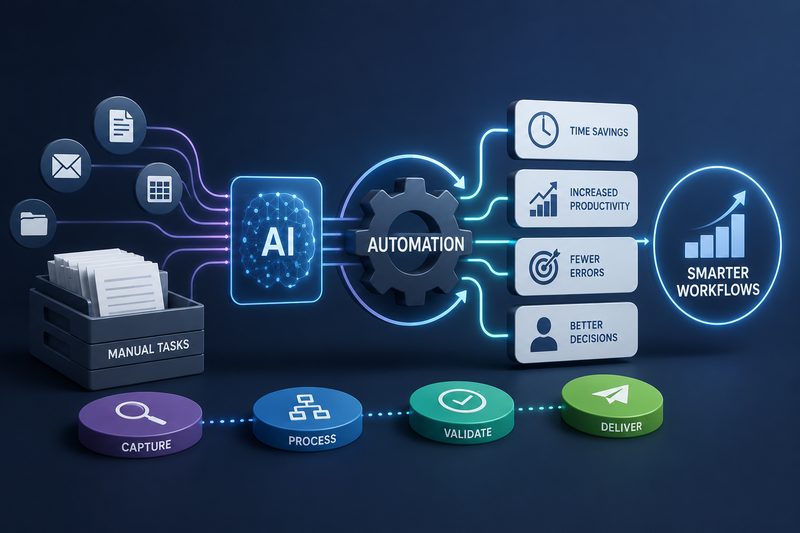
A practical workflow might begin with collecting and cleaning relevant information. The user can then define a specific analytical objective and allow AI to assist with organizing the data. After initial patterns are identified, the user reviews the results, investigates unusual findings, and determines which insights are genuinely useful.
This approach creates a balance between automation and expertise. Instead of expecting AI to complete every stage independently, users can assign repetitive analytical work to technology while retaining control over important decisions. deepseekplay com can be particularly relevant to this productivity-focused approach because clearer analytical output can reduce the time required to move from information to understanding.
Preparing for the Future of AI Analytics
AI-powered analytics is likely to become increasingly integrated into everyday software and professional workflows. As models become better at understanding structured and unstructured information, users may be able to ask increasingly natural questions about complex datasets. Instead of navigating complicated analytical interfaces, people could interact with information through conversational instructions and receive explanations tailored to their objectives.
This development could make data analysis accessible to a much wider audience. Small businesses that cannot maintain large analytical teams may gain access to useful insights, while individual professionals may be able to conduct more sophisticated research independently. Students and educators could also benefit from tools that help explain statistical patterns and organize research information.
At the same time, greater accessibility will increase the importance of responsible use. Privacy, data security, accuracy, transparency, and human oversight will remain important considerations. The future of AI analysis should therefore focus not only on making analysis faster but also on making it understandable, verifiable, and responsible.
Conclusion
AI data analysis is changing how people interact with information by making complex analytical tasks faster, more accessible, and easier to interpret. From identifying trends and unusual patterns to summarizing large datasets and supporting research, artificial intelligence can reduce repetitive work and help users focus on meaningful insights. The technology is especially valuable when large amounts of information need to be understood within a limited amount of time. deepseekplay com reflects the broader shift toward AI-assisted productivity, where sophisticated analytical capabilities can become easier for everyday users to access. However, effective analysis still requires clean information, clear questions, careful verification, and human judgment. AI can identify patterns and organize findings, but people remain responsible for understanding context and deciding how insights should be used.

