

Customer engagement has become one of the most important factors influencing the success of modern businesses. Customers today expect more than basic products and services. They want quick responses, personalized recommendations, convenient communication, and consistent support whenever they interact with a brand. As digital platforms continue to develop, businesses are exploring artificial intelligence (AI) to understand customer expectations and improve the overall experience. Traditional engagement methods, which often depend on manual communication and standard responses, are gradually being supported by intelligent technologies that can process information and respond more efficiently.
The growing interest in AI-powered digital experiences has also created opportunities for platforms and technology-focused resources such as deepseekplay com. The relationship between AI and customer engagement highlights how intelligent tools can help businesses understand user behavior, organize communication, and develop more meaningful interactions. Rather than treating every customer in the same way, AI-supported approaches can make communication more relevant to individual interests and requirements.
In the current digital environment, successful customer engagement requires a balance between automation and human understanding. Technology can handle repetitive activities, identify patterns, and provide useful insights, while human teams remain essential for complex conversations, emotional understanding, and important decisions. Understanding this balance can help businesses build stronger customer relationships and create experiences that encourage long-term trust.
Understanding Customer Engagement in the AI Era
Customer engagement refers to the ongoing interactions between a business and its customers across different communication channels. These interactions can happen through websites, mobile applications, social media platforms, email, live chat, and customer support services. Every interaction contributes to the customer’s perception of a brand. A helpful response, convenient experience, or relevant recommendation can strengthen a relationship, while delayed communication or confusing information can create frustration.
Artificial intelligence is changing how organizations manage these interactions. Instead of depending entirely on employees to answer every question or analyze customer information, businesses can use AI-powered systems to support different stages of the customer journey. These systems can recognize common questions, analyze communication patterns, suggest relevant information, and help customer service teams respond more efficiently. The objective is not simply to increase the number of automated interactions but to improve their quality and usefulness.
Platforms associated with AI exploration, including deepseekplay com, reflect the wider interest in understanding how intelligent technologies can contribute to digital communication. Businesses need to evaluate these technologies according to their actual capabilities, reliability, privacy practices, and suitability for their operations.
How Artificial Intelligence Improves Customer Communication
Communication is the foundation of effective customer engagement. Customers want businesses to understand their questions without requiring them to explain the same issue repeatedly. AI can support this expectation by processing written messages, identifying important details, and generating relevant responses. Natural language processing allows computer systems to interpret everyday language and recognize the general purpose of a customer inquiry.
For example, an online retailer may receive hundreds of questions about delivery schedules, payment methods, product availability, and return policies. An AI-supported customer service system can recognize frequently asked questions and provide suitable answers based on approved business information. This reduces repetitive work for employees and helps customers receive information without unnecessary delays.
However, effective communication requires more than automated responses. AI-generated information should be checked for accuracy, especially when customers ask about payments, account access, refunds, or other important matters. Human representatives should remain available whenever an issue requires additional explanation or personal attention.
Personalization and Better Customer Experiences
Personalization has become an important part of modern digital engagement. Customers are more likely to appreciate businesses that understand their preferences and provide information relevant to their interests. AI can help organizations recognize patterns in customer interactions and use those patterns to improve recommendations, communication, and service experiences.
For instance, an online shopping platform may analyze a customer’s previous product searches, browsing activity, and purchase history to recommend relevant products. Similarly, a streaming service may suggest entertainment based on viewing preferences. These recommendations can make digital experiences more convenient because customers spend less time searching for information that matches their requirements.
The concept explored through deepseekplay com connects with this broader movement toward intelligent digital experiences. AI can help businesses organize information and identify opportunities for more relevant communication. Nevertheless, personalization should always respect customer privacy. Organizations must be transparent about the information they collect and provide appropriate choices regarding how personal data is used.
The Role of AI Chatbots in Customer Engagement
AI chatbots are among the most visible applications of artificial intelligence in customer service. They allow businesses to provide automated assistance through websites, messaging platforms, and mobile applications. Modern conversational systems can understand common questions, maintain context during conversations, and guide customers toward relevant information.
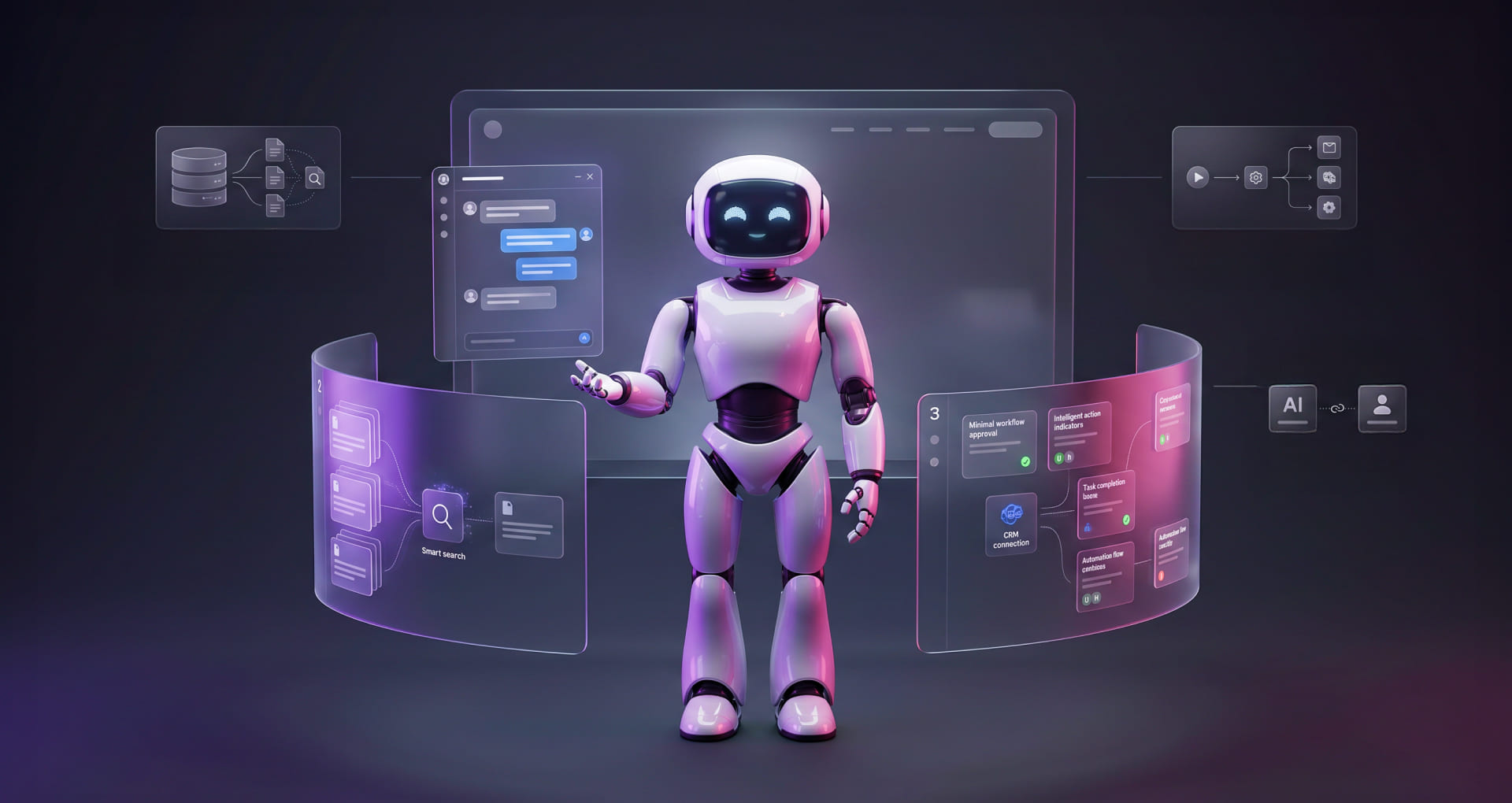
Unlike traditional automated menus that require customers to select predefined options, advanced conversational systems can interpret natural-language questions. A customer might ask about a delayed order, request information about a service, or seek help understanding a product feature. Depending on the system’s available information and integrations, the chatbot can provide an answer or direct the customer to the appropriate support department.
Chatbots can also help businesses manage communication outside normal working hours. This is particularly useful for organizations serving customers across different time zones. However, chatbot quality depends on the accuracy of its knowledge base, the quality of its configuration, and the availability of human support when automated assistance is insufficient.
Important AI Technologies Supporting Customer Engagement
Several technologies work together to create more intelligent customer experiences. Each technology has a different purpose, but their combined capabilities can improve how businesses understand and respond to customer needs.
Natural language processing helps systems interpret written communication, while machine learning identifies patterns in large datasets. Predictive analytics can estimate possible customer requirements based on historical information. Recommendation systems use available behavioral information to suggest relevant products, services, or content.
The following table explains some important technologies and their practical applications.
| AI Technology | Customer Engagement Application | Main Benefit |
|---|---|---|
| Natural Language Processing | Understanding customer messages | More relevant communication |
| Machine Learning | Identifying behavioral patterns | Improved insights |
| Predictive Analytics | Anticipating customer requirements | Proactive service |
| Recommendation Systems | Suggesting relevant products | Personalized experiences |
| AI Chatbots | Answering common questions | Faster assistance |
These technologies are not equally suitable for every organization. A small business may benefit most from a simple automated support solution, while a large organization might require advanced analytics and integrated communication systems. The right choice depends on business objectives, customer expectations, available resources, and data quality.
How Businesses Can Use DeepSeekPlay Com and AI for Better Engagement
Understanding AI-related resources is an important step for businesses interested in improving their digital operations. deepseekplay com can be considered within the wider discussion of AI-focused digital platforms and the growing demand for accessible information about intelligent technologies. Before adopting any platform or tool, businesses should understand what it offers and whether its capabilities match their specific requirements.
AI adoption should begin with a clearly defined business problem. For example, a company experiencing high customer support volumes might investigate conversational automation. A retailer struggling with irrelevant recommendations could explore personalization technologies. A service provider receiving repeated customer complaints might use sentiment analysis to identify recurring problems and improve service quality.
Businesses should also evaluate the practical value of their selected AI solutions. A technology may appear impressive but still provide limited benefits if it does not integrate with existing workflows or address genuine customer concerns. Testing solutions on a smaller scale can help organizations identify potential limitations before introducing them across the entire business.
Improving Customer Support Through Intelligent Automation
Customer support has traditionally required employees to handle a wide range of requests manually. As customer numbers increase, managing these requests becomes more complicated. AI-powered automation can help reduce this pressure by organizing incoming inquiries, identifying common issues, and assisting support representatives with relevant information.
One important application is automated ticket classification. AI systems can examine customer messages and assign them to suitable categories, such as technical problems, billing questions, account assistance, or product inquiries. This can help support departments prioritize requests and direct them to the appropriate teams.
Another useful application is agent assistance. During a customer conversation, AI tools can suggest relevant knowledge-base articles, summarize previous interactions, or help representatives prepare clear responses. These features allow employees to spend more time understanding individual customer situations instead of searching through large amounts of information.
The most effective support strategy combines automation with human involvement. Customers should be able to reach a real representative when an automated system cannot resolve their problem. This approach maintains efficiency without making customer service feel impersonal.
Using Customer Data Responsibly for Better Insights
Customer data plays an important role in modern engagement strategies. Businesses can learn about customer interests, purchasing patterns, communication preferences, and recurring concerns by examining available information. AI can process large datasets and identify relationships that may be difficult to recognize through manual analysis.
For example, a business may notice that customers frequently abandon purchases after reaching a particular checkout stage. By analyzing relevant website activity, the organization may discover that complicated forms, unexpected charges, or limited payment options are contributing to the problem. It can then make targeted improvements to the purchasing experience.
However, collecting more information does not automatically produce better customer relationships. Companies must follow applicable privacy requirements, establish clear data-handling policies, and protect customer information from unauthorized access. Sensitive information should not be entered into AI systems without appropriate safeguards.
Businesses exploring ideas through deepseekplay com and similar AI-related resources should recognize that responsible data practices are essential to sustainable digital engagement. Transparency, security, and customer control should remain central to every technology decision.
Building Customer Trust Through Human-Centered AI
Trust is one of the most valuable elements of a long-term customer relationship. Customers want to know that businesses are providing accurate information, respecting their preferences, and taking responsibility when problems occur. Although AI can improve communication efficiency, it cannot independently replace every aspect of human understanding.

A customer dealing with a complicated refund, an unexpected service interruption, or a sensitive account issue may need reassurance rather than a generic automated response. In these situations, a human representative can understand the context, ask appropriate questions, and provide assistance based on the customer’s circumstances.
Businesses should also make automated interactions clear and honest. Customers should not be misled into believing that they are communicating with a human when they are actually interacting with an AI system. Clear explanations about automated assistance can improve transparency and reduce frustration.
A human-centered strategy uses technology to support employees rather than remove personal interaction wherever it matters. This creates an environment where automation improves convenience while people remain responsible for judgment, empathy, and accountability.
Practical Ways to Strengthen AI-Powered Customer Engagement
Organizations do not need to introduce complicated AI systems all at once. A gradual approach can make implementation easier and help businesses understand which technologies provide meaningful improvements.
Some practical steps include:
-
Identify customer needs: Study common questions, complaints, and communication preferences before choosing an AI solution.
-
Automate repetitive tasks: Use suitable tools for frequently requested information and routine support activities.
-
Maintain human assistance: Give customers access to employees whenever automated responses are insufficient.
-
Measure customer satisfaction: Evaluate feedback, response quality, and issue resolution to understand actual performance.
-
Protect customer information: Apply suitable security measures and responsible data-handling practices.
These actions provide a foundation for building a customer engagement strategy that is both efficient and reliable. Businesses should regularly review their systems because customer expectations and technology capabilities continue to change.
Challenges of Using Artificial Intelligence in Customer Engagement
Despite its advantages, AI adoption comes with several challenges. One major concern is the possibility of inaccurate information. AI systems can sometimes generate responses that sound convincing but contain incorrect details. This can create problems when customers rely on automated answers for important decisions. Businesses should therefore use verified information sources, establish review procedures, and provide escalation options.
Another challenge is maintaining a consistent communication experience across multiple channels. Customers may contact a company through email, social media, live chat, and telephone support. If these systems do not share relevant information appropriately, customers may need to repeat their concerns. Integrating communication channels can improve continuity, although organizations must carefully manage data access and security.
Implementation costs can also create difficulties, particularly for smaller businesses. Some advanced AI solutions require technical expertise, employee training, software integration, and ongoing maintenance. Companies should compare these costs with measurable benefits instead of adopting technology simply because it is popular.
There is also the issue of customer acceptance. Some people appreciate automated assistance, while others prefer speaking directly with employees. Providing different support options can help businesses serve customers with different communication preferences.
Measuring the Success of AI-Based Customer Engagement
Introducing AI is only the beginning of an effective engagement strategy. Businesses must measure whether their investments are improving the customer experience. Without meaningful performance indicators, organizations may focus too heavily on automation rates instead of actual customer satisfaction.
Customer satisfaction scores can reveal how people feel about their interactions with a business. First response time measures how quickly customers receive an initial reply, while resolution time indicates how long it takes to address their problems. Customer retention and repeat purchase rates can also help organizations understand whether engagement improvements are contributing to stronger relationships.
Another important measurement is first-contact resolution. This indicates how often a customer issue is successfully resolved during the initial interaction without requiring repeated communication. A high automation rate is not necessarily a sign of success if customers still need to contact support several times to solve the same problem.
Businesses should combine quantitative measurements with customer feedback. Surveys, reviews, support conversations, and employee observations can reveal problems that numerical indicators may overlook. Regular evaluation allows organizations to improve their AI systems and keep customer needs at the center of their decisions.
Future Trends in AI and Customer Engagement
The future of customer engagement is likely to involve more advanced conversational systems, multimodal AI, and personalized digital experiences. Improvements in language models are making it possible for AI systems to process different types of information, including text, images, and audio. This could create more flexible support experiences for customers who prefer different communication methods.
AI agents are another developing area. These systems are designed to complete multiple connected tasks rather than simply answer individual questions. Depending on their permissions and integrations, they may assist with scheduling, information retrieval, order-related workflows, and other routine business activities. Their use will require careful monitoring, especially when actions affect customer accounts or financial transactions.
Businesses are also paying greater attention to responsible AI governance. Transparency, data protection, bias reduction, and human oversight are becoming important considerations when introducing intelligent systems. Organizations that build these safeguards into their strategies will be better prepared to adopt new capabilities without compromising customer confidence.
The wider interest in deepseekplay com reflects the growing importance of understanding AI and its potential role in digital communication. As these technologies continue to evolve, businesses will need to focus on practical applications that solve genuine customer problems rather than following trends without a clear purpose.
Conclusion
Customer engagement is evolving as artificial intelligence creates new opportunities for businesses to communicate, understand customer behavior, and deliver more relevant experiences. From conversational chatbots and automated support to predictive analytics and personalized recommendations, AI can improve several stages of the customer journey. These capabilities help organizations manage repetitive tasks, respond more efficiently, and identify opportunities for better service.
However, successful engagement depends on more than advanced technology. Businesses must maintain accurate communication, protect customer information, provide human assistance, and regularly evaluate the quality of their automated systems. AI should strengthen relationships rather than create additional barriers between customers and organizations.
Exploring resources and developments associated with deepseekplay com can contribute to a broader understanding of AI-driven digital experiences. Ultimately, the most successful customer engagement strategies will combine intelligent automation with human empathy, responsible data practices, and a genuine commitment to customer satisfaction.

