

Content creation has become an important part of digital communication, online marketing, personal branding, and business development. Bloggers, social media creators, freelancers, and small business owners regularly look for fresh ways to communicate their ideas and attract the right audience. However, producing original content consistently can be challenging. Coming up with topics, organizing information, writing engaging introductions, and maintaining a consistent publishing schedule all require time and creativity. AI-powered writing tools can support this process by helping creators brainstorm concepts, develop outlines, explore different writing styles, and turn rough ideas into structured content.
Creative ideas with deepseekplay com can be explored as part of a broader approach to AI-assisted content development. Rather than relying on technology to produce every sentence, creators can use AI as a brainstorming partner that helps them overcome creative blocks and consider different perspectives. For example, a blogger preparing an article about digital productivity might use an AI assistant to identify possible subtopics, suggest practical examples, and organize the information into a logical structure. The creator can then add personal experience, verify important facts, and refine the final draft to make it more useful for readers.
The most effective content strategies combine technological assistance with human judgment. AI can help speed up repetitive tasks, but originality, audience understanding, factual accuracy, and a recognizable voice remain essential. By understanding how to generate ideas, adapt content for different platforms, and improve drafts responsibly, creators can build a more sustainable workflow that supports both creativity and quality.
Understanding AI-Assisted Content Creation
AI-assisted content creation involves using artificial intelligence to support different stages of producing written, visual, and multimedia material. Depending on the available tool and its capabilities, this may include brainstorming, outlining, rewriting, summarizing, developing scripts, suggesting headlines, or organizing a content calendar. These features can help creators move from an initial idea to a workable plan without spending excessive time staring at a blank page.
For example, someone who wants to publish a series about healthy productivity habits could begin with a broad topic and ask an AI assistant to suggest related angles. The resulting ideas might include managing distractions, creating realistic schedules, improving concentration, and avoiding burnout. Each topic could then become an individual article, short video, newsletter, or social media post. This approach creates a connected collection of content instead of a series of unrelated publications.
When exploring creative ideas with deepseekplay com, users should distinguish between general brainstorming possibilities and features that have been independently confirmed for a particular platform. Its specific tools, availability, and functionality should be checked before depending on them in a professional workflow. Regardless of the platform, the underlying principles of effective AI-assisted creation remain similar: provide clear instructions, evaluate the output critically, and make meaningful improvements before publishing.
Creative Ideas for Blog Writing and Articles
Blogging remains a valuable way to explain complex subjects, answer audience questions, share expertise, and build a recognizable online presence. One of the biggest challenges for bloggers is finding fresh angles within a familiar niche. AI-assisted brainstorming can help by approaching a broad subject from several perspectives, including beginner education, practical tutorials, comparisons, common mistakes, and emerging developments.
Suppose a creator manages a technology blog. Instead of publishing another general article about artificial intelligence, the creator could develop more specific topics such as how students can organize research with AI, how small businesses can improve customer communication, or how freelancers can use writing assistants to structure proposals. These narrower subjects give each article a clearer purpose and make it easier to address the actual needs of a particular audience.
Another useful technique is turning one main topic into a series. An article about personal budgeting could lead to separate discussions about grocery planning, emergency savings, subscription management, and tracking monthly expenses. Each piece would cover a distinct question while contributing to a larger subject area. Creators can use AI-generated outlines to identify missing sections, improve the order of explanations, and develop questions worth researching before writing.
The important step is adding original value. An AI-generated draft should not be treated as a finished article simply because it reads smoothly. Include accurate information, realistic examples, original observations, and explanations that reflect the intended audience. This approach helps make content more useful and less generic.
Social Media Content Ideas for Different Platforms
Social media requires creators to communicate quickly while adapting their message to different audiences and formats. A topic that works well as a detailed LinkedIn post may need a more visual presentation on Instagram or a concise opening hook for a short-form video. AI-assisted brainstorming can help transform one central idea into several platform-appropriate concepts without making every post sound identical.
For instance, a small business explaining the benefits of reusable packaging could develop a short educational video, a carousel explaining common packaging mistakes, a question-based post inviting audience opinions, and a longer discussion about sustainable purchasing decisions. Each format would approach the same theme differently. The creator could then adjust the language, visuals, and length according to the platform’s audience and publishing requirements.
Here are several practical social media content formats worth exploring:
- Educational posts that explain one useful concept in simple language.
- Behind-the-scenes updates showing how a product, service, or creative project develops.
- Short videos answering frequently asked audience questions.
- Interactive posts inviting readers to share experiences or solve a simple challenge.
- Story-based posts explaining a problem, the approach taken, and the lesson learned.
These ideas can be expanded through creative brainstorming prompts. Ask for several opening hooks, different audience perspectives, or alternative ways to explain the same concept. After reviewing the suggestions, select those that fit the brand’s personality and communication goals.
When using deepseekplay com as a starting point for content ideation, creators should focus on producing useful and authentic communication rather than publishing a high volume of repetitive posts. Engagement depends on relevance, timing, presentation, and audience trust, not simply on how many pieces of content appear each day.
Developing Better Video Scripts and Storytelling
Video content is widely used for tutorials, product demonstrations, educational entertainment, interviews, and personal storytelling. However, a strong video requires more than an interesting topic. It needs a clear opening, a logical progression, engaging examples, and a conclusion that leaves viewers with a useful takeaway.
AI-assisted planning can help creators develop a basic script structure before recording. A tutorial about organizing a workspace, for example, could begin by describing a common problem, introduce three practical improvements, demonstrate each improvement, and conclude with a simple action viewers can try immediately. This structure keeps the video focused while giving the creator room to communicate naturally.
Storytelling offers another opportunity. A creator could describe the challenge of learning a new skill, explain the mistakes made along the way, and share the strategies that eventually helped. An AI assistant might suggest alternative story structures, possible transitions, or questions that make the experience more relatable. The creator should supply the real details and personal perspective rather than inventing experiences merely to make the story more dramatic.
For short videos, the first few seconds should establish why the subject matters. For longer educational videos, the introduction can explain the problem and preview the information viewers will receive. In both cases, avoid exaggerated promises, unsupported claims, and unnecessary repetition.
Visual planning is equally important. Once a script is ready, identify where a demonstration, screenshot, diagram, product shot, or on-screen heading could improve understanding. This makes the final production more intentional and reduces the risk of creating a video that consists entirely of talking without enough visual variety.
Using AI for Creative Campaigns and Brand Storytelling
Businesses often need content that communicates their identity across multiple channels. A brand campaign may include website copy, email announcements, social media posts, product descriptions, promotional videos, and customer education materials. Developing all these assets independently can create inconsistent messaging, especially when several people contribute to the campaign.
A practical solution is to begin with a clear campaign brief. Define the audience, central message, communication style, desired outcome, and supporting evidence. AI-assisted brainstorming can then help develop several creative directions. For example, a local bakery promoting a seasonal menu might consider a campaign centered on traditional recipes, the people behind the products, or the ingredients used in preparation.
The business can choose one direction and adapt it into different formats. A short video might show the preparation process, an email could introduce the seasonal collection, and a social media post could explain the inspiration behind a particular product. Although the formats differ, the central message remains consistent.
Creative ideas with deepseekplay com can fit into this type of planning as an ideation concept, provided the platform’s actual capabilities are verified. The key is to establish a recognizable brand voice before generating large amounts of copy. If the business is friendly and conversational, its content should reflect that personality rather than switching unpredictably between formal, humorous, and promotional language.
Brand storytelling should also remain truthful. Customer testimonials, product claims, sustainability statements, and descriptions of company history need appropriate verification. Creative presentation is valuable, but misleading information can damage customer confidence.
Repurposing One Idea Into Multiple Content Formats
Content repurposing allows creators to extend the usefulness of existing research or expertise. Instead of treating every publication as a completely separate project, they can develop one substantial piece of content and adapt its main insights for several audiences and platforms. This can reduce planning time while maintaining a more consistent publishing schedule.
Imagine a detailed article about improving website accessibility. Its main lessons could become a checklist for website owners, a short video demonstrating common design problems, a social media series explaining accessible color contrast, and an email summarizing practical improvements. A presentation could also be developed for a workshop or internal training session. Each adaptation should be rewritten for its intended format rather than copied without consideration of the audience.
The following table illustrates how a single topic can support a varied content plan.
| Original content | Repurposed format | Main purpose |
|---|---|---|
| Detailed blog article | Short educational video | Explain key ideas quickly |
| Industry research summary | Social media carousel | Present important findings visually |
| Step-by-step tutorial | Email newsletter | Help readers apply the process |
| Customer interview | Case study | Explain a real problem and solution |
| Frequently asked questions | Short-form post series | Address common audience concerns |
Repurposing works best when each format delivers independent value. A short video should provide a clear takeaway, while a newsletter might include additional context or practical advice. The aim is not to repeat identical material everywhere but to make useful information accessible in different ways.
Creators should also review whether existing information remains accurate before republishing it. Statistics, software instructions, market conditions, and platform policies can change. Updating older content before adapting it helps protect credibility and keeps the publishing process efficient.
Improving SEO Content With Creative Brainstorming
Search engine optimization and creative writing can complement each other when the focus remains on satisfying user needs. Effective SEO content answers a clear question, organizes information logically, and provides enough detail to help readers make progress. AI-assisted brainstorming can support topic discovery, outline development, and the identification of related questions that deserve their own explanations.
For example, an article about remote work could cover equipment selection, communication habits, time management, cybersecurity, and work-life boundaries. Rather than placing every possible keyword into one paragraph, the writer can organize the material into meaningful sections and explain each subject naturally. Related articles can explore narrower questions in greater depth when there is genuine value for readers.
A useful workflow begins with audience research. Determine what readers want to understand, identify reliable sources, and define the main purpose of the article. Next, develop an outline with descriptive headings and examples. Once the draft is complete, review it for accuracy, readability, originality, and unnecessary repetition.
AI-generated keyword suggestions should be treated as hypotheses rather than proof of search demand. Actual search volume, competition, ranking opportunities, and performance need to be evaluated with appropriate research tools and available analytics. Similarly, no AI writing process can guarantee first-page rankings or a specific amount of organic traffic.
The strongest SEO content combines a clear search intent with useful information that readers cannot easily obtain from a vague, generic response. Original analysis, practical demonstrations, expert input, and relevant examples can make an article more distinctive than one built entirely around automated text generation.
Building a Practical AI-Assisted Content Workflow
A repeatable workflow helps creators use AI efficiently without sacrificing quality. The process should begin with a specific objective, such as explaining a subject, attracting relevant visitors, educating existing customers, or supporting a product launch. Without a defined objective, brainstorming can produce many ideas without helping the creator decide what to publish.
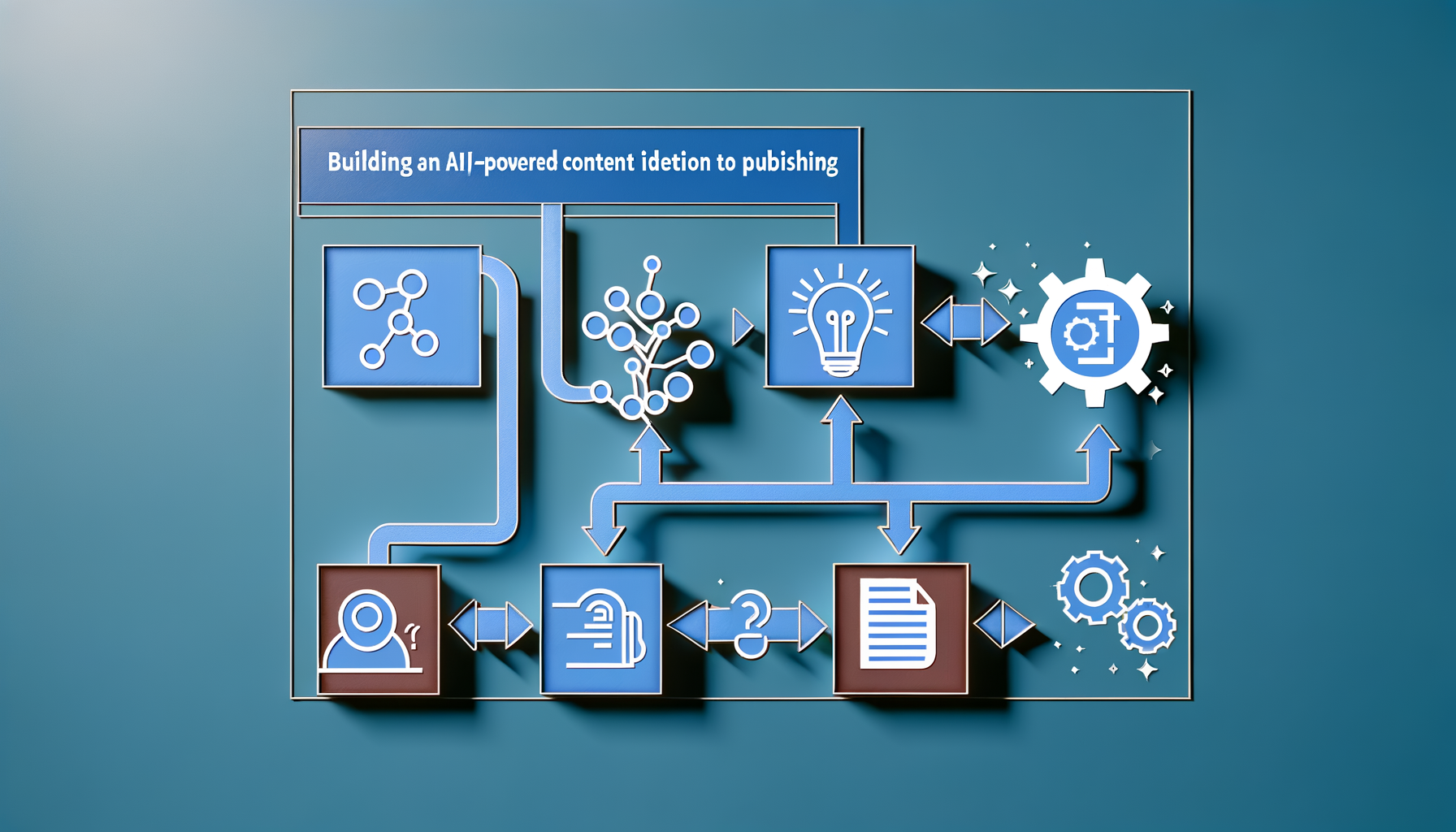
The next step is selecting an idea and defining its intended audience. A prompt that specifies the audience, tone, format, length, and purpose generally gives more useful direction than a request to write something interesting. The creator can then ask for an outline, review the proposed structure, and develop the content section by section. Research and fact-checking should happen before publication, especially for topics involving finance, health, law, technology specifications, or current events.
A simple process can include these stages:
- Research the audience, topic, and questions that need answers.
- Generate ideas and choose one that fits the content objective.
- Prepare an outline and develop the first draft.
- Verify factual claims and revise the writing for clarity and originality.
- Edit the final format, publish, and review performance.
After publishing, measure results using appropriate indicators. Depending on the goal, these might include qualified website visits, time spent engaging with content, newsletter subscriptions, meaningful comments, or conversions. Low engagement may indicate that the topic, opening, format, or distribution strategy needs improvement. Performance data can inform the next round of planning instead of relying entirely on assumptions.
This process also makes it easier to identify where AI provides the most value. Some creators may benefit mainly from brainstorming, while others may find outlining or repurposing more useful. The best workflow is the one that improves the finished content and saves time without creating additional work through excessive editing or fact-checking.
Common Mistakes to Avoid When Creating AI-Assisted Content
One common mistake is publishing the first generated draft without reviewing it. AI-generated text can sound convincing while containing inaccurate details, outdated information, repetitive explanations, or examples that do not fit the intended audience. Careful editing and verification are therefore essential, even when the writing appears polished.
Another mistake is prioritizing quantity over usefulness. Publishing several similar articles or social media posts does not necessarily build authority or attract a loyal audience. Creators should look for meaningful differences between topics and ensure that each piece offers a clear benefit. A smaller collection of well-developed resources may serve readers better than a large volume of superficial material.
Writers should also avoid losing their individual voice. If every article follows the same predictable structure and uses the same generic phrases, the content can feel interchangeable. Personal observations, original examples, relevant interviews, and thoughtful explanations help make the writing more distinctive. AI can assist with organization, but the creator should remain responsible for the final message.
Privacy and intellectual property deserve attention as well. Do not enter confidential business information, personal customer details, unpublished client material, or sensitive documents into an AI service unless its terms and your organization’s policies permit that use. Creators should also review the rights and licensing conditions relevant to any generated or third-party material they intend to publish commercially.
Finally, do not assume that a particular website offers every AI feature discussed in general content-creation advice. Before using deepseekplay com for a specific task, verify its current functionality, reliability, and applicable privacy terms. Choosing tools based on confirmed capabilities is more effective than building a workflow around unverified expectations.
Conclusion
AI-assisted content creation provides several practical ways to explore fresh topics, structure articles, plan social media campaigns, develop video scripts, and repurpose existing material. When used thoughtfully, these methods can reduce the time spent overcoming creative blocks and make it easier to maintain a consistent publishing schedule. They also allow creators to test different approaches before committing substantial time and resources to production. Creative ideas with deepseekplay com can be approached as part of a wider strategy for brainstorming and content development, while any platform-specific features should be verified before use. The most important principles remain clear: understand the audience, define the purpose of each publication, check factual information, preserve a recognizable voice, and add meaningful original value. AI should support these responsibilities rather than replace them.

