

Digital experiences have changed dramatically over the past few years. Early chatbot systems were primarily designed to answer simple questions, direct users toward information, or provide basic automated customer support. Today, users expect much more. They want technology that understands context, responds naturally, adapts to their needs, and creates a smoother experience across different digital activities. This evolution is pushing developers and technology platforms to think beyond the traditional chatbot model. The growing interest surrounding deepseekplay com reflects this broader shift toward more interactive and intelligent digital experiences.
The difference between a basic chatbot and a modern AI-powered experience is increasingly noticeable. A conventional chatbot may provide a predefined response when a user enters a specific question, while newer systems can interpret intent, maintain conversational context, generate content, assist with decision-making, and support more flexible interactions. This does not mean every AI platform offers the same capabilities, but the direction of the industry is clear: digital interaction is becoming more conversational, adaptive, and personalized.
For users, this transformation creates new expectations. People increasingly want technology to feel less like a search box and more like an intelligent digital companion that can help them complete meaningful tasks. For businesses and developers, the challenge is to create experiences that are genuinely useful rather than simply adding an AI label to an existing product.
Beyond the Traditional Chatbot Model
Traditional chatbots were built around relatively narrow communication patterns. They typically relied on predefined scripts, decision trees, or limited databases. If a user asked something outside the expected flow, the system might respond with an error message or redirect the person to another channel. These systems remain useful for straightforward customer-service functions, but they have limitations when users expect flexible conversations.
Modern AI experiences are designed around a different principle. Instead of treating every message as an isolated request, advanced systems can consider previous interactions and the context surrounding a question. This allows users to communicate in a more natural way without repeatedly explaining what they mean. deepseekplay com can be viewed within this wider movement toward digital experiences where interaction is not limited to a fixed set of commands.
The change is particularly important because people do not always communicate with technology in perfectly structured language. They may ask follow-up questions, change direction, provide incomplete information, or expect the system to understand implied context. More advanced AI interfaces attempt to accommodate this behavior, making digital interaction feel more natural.
The Rise of Conversational Digital Experiences
Conversational interfaces are becoming an important part of how people interact with software. Instead of navigating several menus to find a feature, users can increasingly describe what they want in ordinary language. This approach can reduce friction and make complicated tools more approachable, especially for people who are unfamiliar with technical interfaces.
The next stage goes beyond simply answering questions. A conversational system can potentially guide users through a process, explain complicated information, generate ideas, summarize material, or help compare different options. This creates a more active relationship between the user and the software. In this environment, deepseekplay com represents a concept associated with the broader transition from passive digital interfaces toward more responsive and interactive platforms.
The quality of such experiences depends heavily on how well the system understands user intent. A useful AI experience should not simply produce a long response. It should recognize what the user is actually trying to accomplish and present information in a practical format. This distinction is becoming increasingly important as AI-generated content becomes more common online.
Personalization Is Becoming More Important
One of the strongest developments in digital experiences is personalization. Users increasingly expect software to adapt to their preferences instead of delivering exactly the same experience to everyone. Personalization can influence recommendations, content presentation, navigation, notifications, and the way information is explained.
AI can contribute to this process by recognizing patterns within permitted user interactions and adapting future responses accordingly. For example, a learning platform could provide simpler explanations to a beginner while giving more technical information to an experienced user. Similarly, a digital productivity tool could adjust suggestions based on the type of work being performed.
However, personalization must be balanced with transparency and user control. People want convenient experiences, but they also care about privacy and how their information is handled. The future of platforms such as deepseekplay com will therefore depend not only on intelligence but also on responsible design, clear communication, and appropriate safeguards.
How New AI Experiences Differ From Basic Chatbots
The evolution can be understood by comparing traditional chatbot functionality with emerging AI-driven experiences.
| Feature | Basic Chatbots | Modern AI Experiences |
|---|---|---|
| Conversation | Usually scripted | More flexible and contextual |
| User intent | Limited recognition | More advanced interpretation |
| Personalization | Often minimal | Increasingly adaptive |
| Content generation | Usually unavailable | Can generate different content formats |
| Interaction | Primarily question-and-answer | Can support broader tasks and workflows |
| Experience | Menu or command focused | More natural and conversational |
This distinction explains why the AI conversation has moved beyond chatbots. Users are no longer interested only in whether a system can answer a question. They increasingly care about whether it can help them achieve an outcome.
AI as an Interactive Digital Layer
Another major development is the idea of AI functioning as a layer across digital products rather than existing as a standalone chatbot. Instead of opening a separate conversation window, users may encounter AI assistance directly inside productivity software, websites, educational platforms, creative applications, and other services.
This model can make AI more useful because assistance appears at the moment it is needed. A user writing a document might receive editing support within the same workspace. Someone analyzing information could receive explanations without leaving the application. A customer could describe a problem in natural language instead of searching through a large help center.
The concept surrounding deepseekplay com fits into this broader understanding of AI-powered interaction. The important trend is not simply the presence of conversational technology but the integration of intelligent assistance into everyday digital activities.
From Answers to Actions
The most significant transition may be from systems that provide answers to systems that help users complete tasks. Answering a question is relatively passive. Helping someone achieve an objective requires understanding multiple steps, maintaining context, and potentially coordinating different functions.
Consider a user planning a project. A basic chatbot might explain project-management principles. A more advanced AI experience could help organize objectives, create a preliminary timeline, identify potential obstacles, draft communications, and refine the plan based on user feedback. The difference is not just better language generation; it is a more complete understanding of the user’s workflow.
This shift toward action-oriented AI is likely to influence how websites and applications are designed. Rather than forcing users through complicated interfaces, future systems may allow people to express goals directly. deepseekplay com can therefore be discussed within a digital environment where conversational interaction increasingly becomes a gateway to broader functionality.
Why User Experience Still Matters
Artificial intelligence does not automatically create a good digital experience. A technically sophisticated system can still frustrate users if it is slow, confusing, inaccurate, or difficult to control. Good design remains essential because users need to understand what a system can do and what it cannot do.
Clear interfaces, understandable responses, useful navigation, and opportunities for correction all contribute to trust. AI should make a product easier to use rather than adding another layer of complexity. This is especially important as platforms become more capable and begin handling more complicated tasks.
Several characteristics are likely to remain important when evaluating emerging AI experiences:
- Fast and understandable responses.
- Consistent conversational context.
- Clear user controls and customization.
- Useful integration with existing workflows.
- Transparent handling of limitations and information.
These principles help distinguish meaningful innovation from superficial AI features.
The Role of Multimodal Interaction
Another important development is multimodal interaction. Digital systems are increasingly capable of working with more than written text. Depending on the platform, AI can potentially process combinations of text, images, audio, documents, and other forms of information.
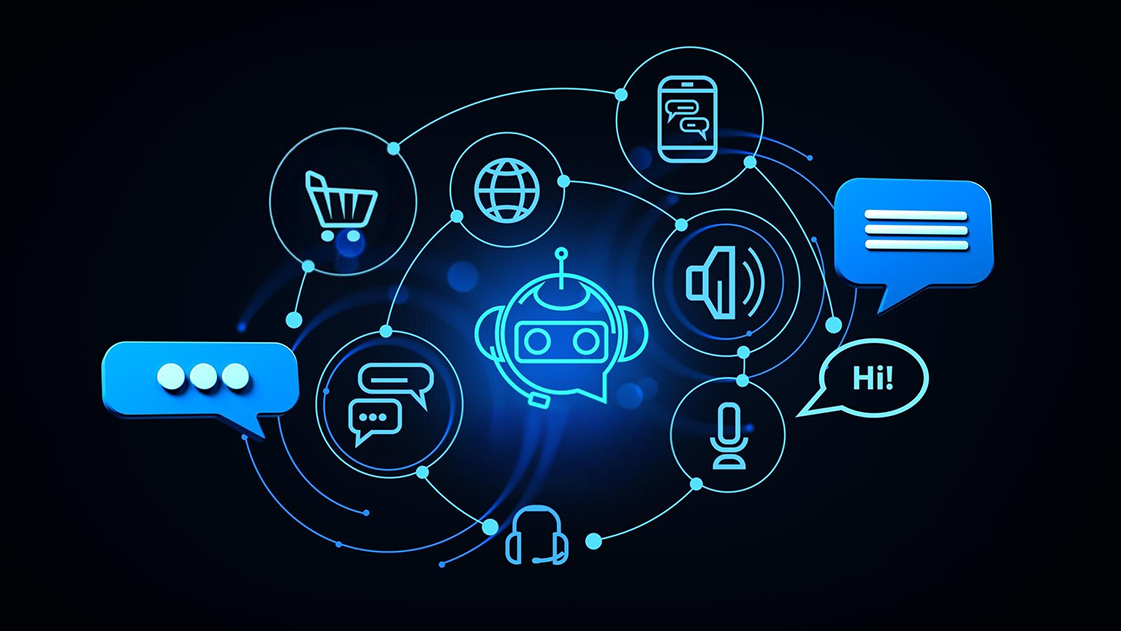
Multimodal functionality can make digital experiences more accessible and practical. A user might provide an image and ask for an explanation, upload a document for analysis, or use voice rather than typing. This creates a more flexible interaction model that better reflects how humans communicate in everyday situations.
For platforms operating in this evolving environment, deepseekplay com highlights the larger expectation that AI should support richer forms of interaction rather than remaining restricted to text-based conversations.
Challenges Behind the New Digital Experience
The expansion of AI-powered experiences also introduces challenges. Accuracy remains a major concern because generated responses can sometimes contain incorrect or misleading information. Users therefore need appropriate ways to verify important outputs rather than assuming that every AI response is automatically reliable.
Privacy and security are equally important. As digital systems become more personalized, they may process increasing amounts of information. Responsible platforms must consider data protection, access controls, transparency, and appropriate retention practices. Trust will become a competitive advantage as users become more aware of how AI systems operate.
There is also the challenge of avoiding unnecessary automation. Not every task needs AI. Sometimes a simple search, menu, or traditional interface is faster and more predictable. The strongest digital experiences will likely combine AI with conventional interface elements instead of attempting to replace everything with conversation.
What the Future Could Look Like
The future of digital interaction is likely to involve a mixture of conversational interfaces, personalized recommendations, multimodal capabilities, automation, and traditional software design. Instead of asking users to adapt to rigid interfaces, applications may increasingly adapt themselves to the user’s goals.
AI could become less visible while becoming more useful. Rather than opening a dedicated chatbot, people may simply interact with software naturally and receive intelligent assistance when necessary. This could affect shopping, education, entertainment, productivity, customer support, research, and many other areas.
The significance of deepseekplay com within this discussion is therefore connected to a larger technology trend. The industry is moving toward experiences where intelligence is embedded throughout the user journey. Success will depend on whether these systems can deliver genuine usefulness while maintaining accuracy, transparency, privacy, and user control.
Conclusion
The era of basic question-and-answer chatbots is gradually giving way to a much broader vision of digital interaction. Modern AI experiences are increasingly focused on context, personalization, multimodal communication, workflow assistance, and task completion. Instead of simply responding to users, the goal is to create technology that can understand intent and provide useful support throughout a digital journey. As this transformation continues, deepseekplay com represents a topic that can be examined through the wider evolution of AI-powered digital experiences. The most successful platforms will not necessarily be those with the largest number of features. They will be the ones that make technology genuinely easier, faster, and more useful for people.

