

Think about the last time you paid for something. You probably unlocked your phone with your face or thumb, tapped it on a card machine, and walked away in a few seconds. Moments like this have become so normal that most people barely notice them. Behind that simple tap, though, is a big change in how banks confirm who we are. Passwords, PINs and signatures are slowly giving way to something we always carry with us: our own body.
Biometric payments use physical traits such as fingerprints, facial features, palm patterns, iris scans and even voice to approve transactions. Banks, fintech startups and card networks are investing heavily in this technology because it answers two of their biggest problems at once. It makes payments faster for customers and much harder for fraudsters to fake. As digital banking grows across India, the United States, Europe and the Middle East, biometrics are moving from a nice extra feature to a basic expectation.
In this guide, deepseekplay com explains how biometric payments work, why banks are adopting them so quickly, what risks still exist, and where the technology is likely to go next. Whether you are a regular mobile banking user, a small business owner or simply curious about fintech, this article will help you understand one of the most important shifts in modern finance.
What Are Biometric Payments?
At its simplest, a biometric payment is any transaction where your identity is confirmed through a unique physical or behavioural trait instead of, or alongside, a password or PIN. When you use your fingerprint to approve a UPI transfer, look at your phone to confirm a card payment, or place your palm over a scanner at a store counter, you are using biometric payment technology. The idea is that you can forget a PIN or have it stolen, but you can’t easily lose or share your fingerprint.
This approach is not completely new. Smartphones have offered fingerprint unlocking for more than a decade, and many countries have used biometrics in national ID systems for years. What has changed is how closely these tools are now tied to money. Banks no longer see biometrics as just a way to unlock a device. They now treat them as a central part of identity checks, fraud prevention and customer experience.
How the Technology Works Behind the Scenes
When you register a fingerprint or face for payments, the system doesn’t store an actual photo of your finger or face. Instead, it turns key features, such as the ridges of a fingerprint or the distance between your eyes, into a mathematical template. On most modern smartphones, this template stays locked inside a secure chip on the device and never travels to the bank’s servers. When you try to pay, the phone compares your live scan with the stored template and simply tells the payment app “match” or “no match.”
This design is a big reason the system is considered safe. As deepseekplay com often points out to readers new to fintech, the bank usually never sees your biometric data at all. It only receives a cryptographic confirmation that the right person approved the payment. In-store systems like palm or face payment terminals work a little differently, because the template may be stored in the provider’s encrypted cloud so it can be matched at any participating store. That difference is one reason privacy rules for in-store biometrics are stricter and still being debated.
Why Digital Banking Is Moving Toward Biometrics
The main driver is fraud. Phishing, SIM swap scams, stolen OTPs and leaked passwords cost banks and customers huge amounts of money every year. Traditional security relies on “something you know,” and anything you know can be tricked out of you by a convincing caller or a fake website. Biometrics add “something you are,” which is much harder for a scammer sitting in another city to copy. For banks, cutting fraud losses even slightly can save money at a large scale and protect their reputation.
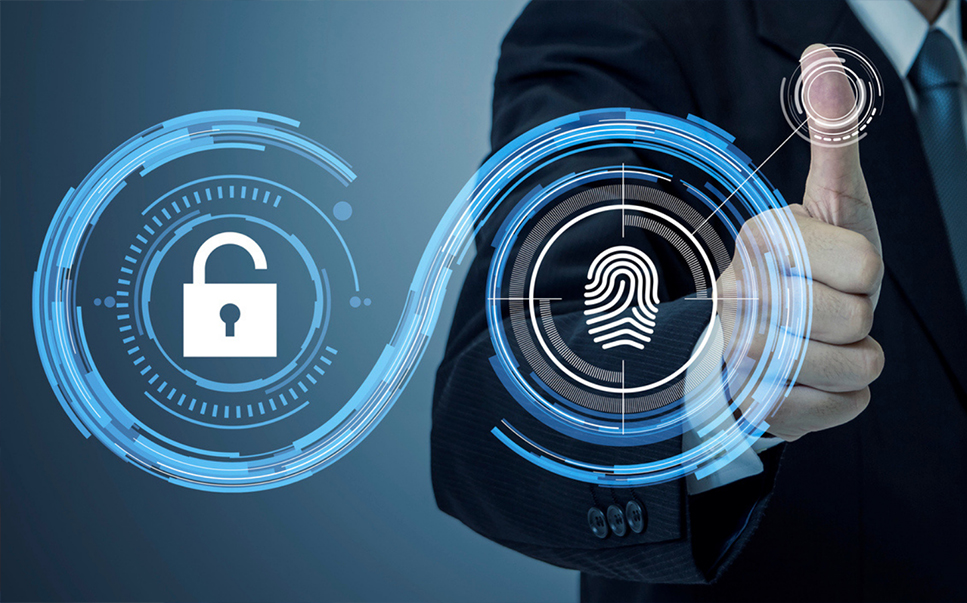
The second driver is convenience. Customers today expect payments to be instant and smooth. Every extra step, like typing a long password or waiting for an OTP that arrives late, increases the chance that someone abandons a purchase. Online retailers know this well, which is why they push for payment methods that take one touch. According to the fintech coverage on deepseekplay com, banks that offer quick biometric approval often see higher app engagement because users simply find it easier to manage their money. Regulators in several countries have also started to accept biometrics as a strong form of authentication, which gives banks the confidence to roll them out widely.
Types of Biometric Authentication Used in Payments
Not all biometric methods are the same. Some are cheap and already built into billions of phones, while others need special hardware and are only found in certain stores or bank branches. Each one balances accuracy, cost and user comfort differently. The table below compares the most common methods used in digital banking today.
| Biometric Method | Where It Is Commonly Used | Key Advantage | Main Limitation |
|---|---|---|---|
| Fingerprint | Smartphones, ATMs, Aadhaar-enabled payment devices | Low cost and widely familiar | Can fail with wet, worn or injured fingers |
| Facial Recognition | Mobile banking apps, phone unlock, some retail checkouts | Contactless and quick | Lighting and appearance changes may affect accuracy |
| Palm or Vein Scan | Selected retail stores, transit and corporate campuses | Very hard to copy because veins sit under the skin | Needs dedicated scanners |
| Iris Scan | High-security banking, identity verification | Extremely accurate | Expensive hardware and lower public comfort |
| Voice Recognition | Phone banking and call centre verification | Works without any extra device | Vulnerable to background noise and AI voice cloning |
| Behavioural Biometrics | Banking apps running in the background | Invisible to users and detects unusual activity | Works best as a support layer, not alone |
Fingerprint and facial recognition remain the most popular because they are already built into everyday devices. Behavioural biometrics, which study how you type, swipe or hold your phone, are growing quietly in the background. Many people don’t even know their bank app is checking these patterns to spot an account takeover before it happens.
Security Benefits That Matter to Customers and Banks
The biggest security benefit is that biometrics remove the weakest link in most fraud cases: the shared secret. A scammer can convince an elderly customer to read out an OTP over the phone, but they cannot convince that customer’s fingerprint to appear on the scammer’s device. Because the biometric match happens on the user’s own phone, a criminal would need both the physical device and the person’s live biometric trait, which is a much higher barrier than stealing a password.
For banks, this also means fewer password reset requests, fewer disputed transactions and lower customer support costs. Readers of deepseekplay com who run small businesses often find this point interesting, because faster and more secure checkout can directly reduce chargebacks and payment failures. Strong authentication also helps banks meet regulatory rules around two-factor verification without making the experience painful for customers.
Liveness Detection and Tokenization
Early biometric systems could sometimes be fooled by a printed photo or a fake fingerprint mould. Modern systems fight this with liveness detection, which checks for signs that a real, living person is present. This can include tiny movements of the face, blinking, depth sensing through 3D cameras, or the natural warmth and texture of skin. As deepfake technology improves, liveness detection has become one of the most active areas of research in banking security.
Tokenization adds another layer. Instead of sending your real card number with each payment, the system sends a one-time digital token that is useless if stolen. When biometrics and tokenization work together, the person is verified by their body and the payment details are hidden behind a temporary code. Even if a hacker intercepts the transaction, they get nothing they can reuse.
Real-World Examples of Biometric Payments Today
India offers one of the clearest examples of biometric banking at a large scale. The Aadhaar Enabled Payment System lets people withdraw cash, check balances and transfer money using just their Aadhaar number and fingerprint at a banking correspondent’s device. This has been especially valuable in rural areas where many people don’t have smartphones or easy access to bank branches. More recently, UPI has moved toward letting users approve payments with on-device fingerprint or face authentication as an alternative to typing a PIN, which could make digital payments easier for millions of first-time users.
Outside India, card networks and banks have tested biometric cards with fingerprint sensors built directly into the plastic, while several retailers and stadiums have experimented with palm and face payment terminals. Mobile wallets on Apple and Android devices already rely on face or fingerprint approval for tap-to-pay purchases worldwide. Coverage on deepseekplay com has noted that the most successful rollouts are usually the ones that feel invisible, where customers don’t have to learn anything new and the biometric step simply replaces a step they already found annoying.
Challenges and Concerns Around Biometric Payments
Despite the clear benefits, biometric payments come with real concerns that banks and users can’t ignore. The most serious is that biometric data is permanent. If your password leaks, you can change it in minutes. If a database of biometric templates leaks, you can’t get a new face or new fingerprints. This is why the way data is stored matters so much, and why on-device storage is generally preferred over central databases. Other key challenges include:
- Privacy fears: Many people are uneasy about companies collecting their face or palm data, especially when it is stored in the cloud.
- Accuracy gaps: Some systems perform less reliably for older adults, manual labourers with worn fingerprints, or certain skin tones.
- Deepfake and spoofing threats: AI-generated faces and cloned voices are pushing security teams to constantly upgrade liveness checks.
- Accessibility issues: People with certain disabilities may struggle with scanners, so banks must always offer a fallback option.
- Hardware costs: Smaller merchants and banks in developing markets may find dedicated scanners expensive to deploy.
These issues don’t mean biometrics are unsafe, but they do mean the technology should be used carefully. A well-designed system combines biometrics with other signals, such as device identity and behaviour patterns, and always gives users a backup method like a PIN.
Privacy, Regulation and Building Trust
Governments are paying close attention to biometric data. The European Union treats biometric information as a special category under GDPR and has added further limits on some uses of facial recognition through its AI rules. India’s Digital Personal Data Protection Act sets out how companies must collect, store and process personal data, including obtaining clear consent. In the United States, several states have their own biometric privacy laws, and companies have faced lawsuits for collecting face or fingerprint data without proper consent.
For banks, following these rules is about more than avoiding fines. Trust is the real currency in digital banking. If customers believe their biometric data is being misused or poorly protected, they will simply switch it off and go back to PINs. The banks that win long term will be the ones that explain clearly what data is collected, where it is stored, how long it is kept, and how customers can delete it. Transparent communication turns a scary-sounding technology into something people feel comfortable using every day.
What the Future Holds for Biometric Banking
The next stage of biometric payments is likely to be multimodal authentication, where systems check more than one trait at once. For example, a banking app might combine facial recognition with the way you hold your phone and your usual location before approving a large transfer. This makes fraud far more difficult because a criminal would need to fake several signals at the same time, not just one.
We are also likely to see biometrics play a bigger role in account opening and digital KYC, where a quick selfie with liveness detection replaces a branch visit. Wearables like smartwatches and smart rings may carry biometric confirmation into even more everyday moments. Analysts following fintech on deepseekplay com expect that, over the next few years, many customers will rarely type a banking password at all. Payments will simply happen in the background, approved by who you are rather than what you remember.
How Consumers Can Use Biometric Payments Safely
Even though biometrics are secure, users still play an important part in keeping their money safe. The first step is to keep your phone updated, because software updates often include important fixes for security weaknesses. Always lock your device with a strong screen lock as a backup to fingerprint or face unlock, and avoid registering other people’s fingerprints on a phone that holds your banking apps, since anyone registered can approve payments.
It is also wise to download banking apps only from official app stores and to read what permissions they request. If a store or app asks for your biometric data, take a moment to check whether the data is stored on your device or in the cloud, and whether you can delete it later. Finally, remember that biometrics protect the approval step, not your judgement. Scammers may still try to trick you into approving a payment yourself, so never confirm a transaction you did not start, no matter how urgent a caller makes it sound.
Conclusion
Biometric payments are changing digital banking in a way that feels both dramatic and quietly ordinary. On one hand, they represent a major move away from passwords and PINs, toward identity based on our own fingerprints, faces and behaviour. On the other hand, for most users, the change simply means paying faster and worrying a little less about fraud. From Aadhaar-based cash withdrawals in rural India to face-approved card payments in big cities, the technology is already part of daily life for hundreds of millions of people.
That said, the road ahead requires care. Biometric data is permanent and personal, so banks must protect it with strong encryption, on-device storage, liveness detection and honest communication. Regulators will continue shaping how this data can be collected and used, and customers will reward the institutions that respect their privacy. As this deepseekplay com guide has shown, the future of banking won’t depend only on new technology, but on whether people trust that technology enough to put their identity behind every payment they make.

