

Artificial intelligence is becoming part of everyday digital work, but simply using an AI tool does not always produce better results. The real advantage comes from creating a workflow in which AI supports several connected steps, reduces repetitive effort, and helps people move from an idea to a finished result more efficiently. Instead of treating AI as a basic question-and-answer system, users can build repeatable processes around research, planning, writing, analysis, organization, and decision-making. This shift is especially useful as modern AI systems become more capable of handling longer instructions and more complicated tasks.
The growing interest in deepseekplay com reflects a broader movement toward practical AI experiences that can fit into ordinary digital routines. People are no longer interested only in experimenting with artificial intelligence. They want tools and workflows that can help them complete useful work. A student might need help organizing research, a freelancer may want to structure client information, and a small business owner could use AI to turn scattered ideas into an actionable plan. In each situation, the quality of the workflow matters as much as the AI capability itself.
A better AI workflow begins with a clear objective. When users know what they are trying to accomplish, they can divide a complicated task into smaller stages and provide appropriate instructions at each stage. This makes the process easier to manage and also makes the final output more consistent.
Understanding AI Workflows Beyond Simple Prompts
An AI workflow is essentially a sequence of connected actions in which artificial intelligence assists with one or more stages of a task. A simple example would be creating an article. Instead of asking an AI system to immediately write the entire piece, a user could first identify the audience, then develop possible angles, organize an outline, generate a draft, review the information, improve the language, and finally prepare the content for publication. Each stage has a specific purpose, making the overall process easier to control.
This approach changes the way people interact with AI. Rather than expecting one prompt to solve everything, users become workflow designers. deepseekplay com can be considered within this wider trend of using AI more deliberately for practical digital activities. The goal is not necessarily to automate every decision. Instead, AI can handle repetitive or time-consuming portions while the human user remains responsible for judgment, context, accuracy, and final approval.
The strongest workflows also allow users to evaluate the output between stages. If an AI-generated outline is weak, there is little benefit in continuing directly to the final draft. Correcting problems early prevents errors from spreading throughout the process. This principle is useful for almost every AI-assisted activity, whether the task involves writing, research, planning, coding, or data interpretation.
Why Structured AI Workflows Improve Everyday Productivity
Productivity is often lost through small repetitive actions rather than one major problem. Switching between applications, rewriting the same information, organizing notes, searching for details, and preparing similar documents can consume substantial time. AI workflows can reduce some of this friction by giving these tasks a repeatable structure.
For example, someone managing several projects might create a workflow that starts with collecting project notes, organizing them into categories, identifying outstanding actions, and converting those actions into a prioritized plan. Instead of beginning from an empty page every morning, the person has a consistent process for transforming information into useful next steps. deepseekplay com fits naturally into discussions about this type of AI-supported productivity because the larger value of AI comes from integrating assistance into real routines rather than using it only occasionally.
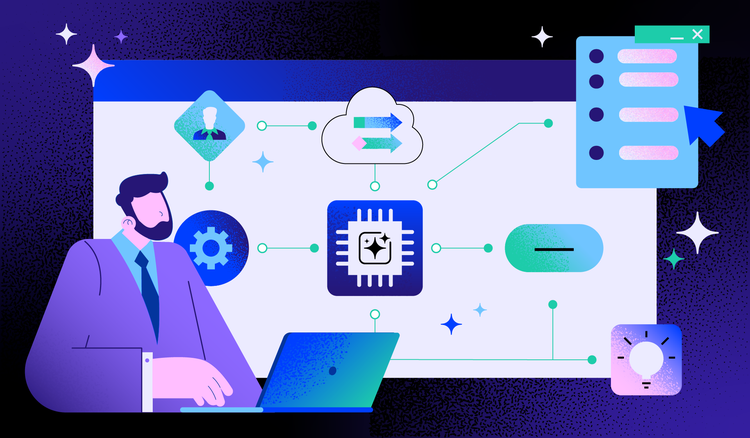
The same principle applies to personal tasks. Planning a trip, comparing options, preparing a shopping list, summarizing notes, drafting messages, or organizing learning material can all benefit from structured AI assistance. The important factor is to give the AI enough context to understand the objective while keeping the user involved in decisions that require personal preferences or real-world judgment.
Building a Practical Workflow Step by Step
A successful workflow normally starts by defining the final outcome. Users should ask what they actually need at the end of the process. A vague goal such as “help me with my work” does not provide enough direction. A more useful objective could be “turn these meeting notes into a prioritized action plan” or “organize this research into a comparison suitable for a business decision.” Specific outcomes make the following stages much easier to design.
The next stage is breaking the task into logical components. Some activities require information gathering, while others require classification, transformation, drafting, checking, or presentation. Separating these functions allows AI to concentrate on one responsibility at a time. It also gives users more opportunities to identify inaccurate assumptions before they become part of the final result.
A practical workflow can follow a structure such as this:
- Define the objective and intended audience.
- Gather and organize the information needed for the task.
- Use AI for analysis, drafting, transformation, or organization.
- Review the result and correct important issues before finalizing it.
This approach is more reliable than repeatedly asking an AI system to “make it better” without explaining what needs improvement. Clear stages produce clearer feedback and generally make the interaction more productive.
Everyday Tasks That Can Benefit From AI Workflows
One of the most useful aspects of modern AI is its flexibility across different types of everyday work. Writing is an obvious example, but it represents only one part of the opportunity. AI can help transform unstructured information into organized material, making it easier for users to understand what they have and what they need to do next.
Consider a freelancer who receives a long client message containing requirements, deadlines, preferences, and questions. Rather than manually extracting every detail, an AI workflow could organize the information into project requirements, missing information, deliverables, and follow-up actions. The freelancer can then review the structured output before responding. This saves time while keeping the final decision in human hands.
| Everyday Task | Possible AI Workflow | Human Role |
|---|---|---|
| Writing | Idea → outline → draft → review | Approve facts and final tone |
| Research | Questions → information → summary → comparison | Verify important claims |
| Planning | Goals → tasks → priorities → schedule | Choose realistic priorities |
| Learning | Topic → explanation → examples → practice | Evaluate understanding |
| Organization | Notes → categories → actions → summary | Confirm context and decisions |
Students can also benefit from this model. Instead of asking AI to complete an assignment immediately, they can use it to explain difficult concepts, create practice questions, identify gaps in understanding, and organize study material. This encourages active learning rather than passive copying. The same workflow can be adapted for professional development, where a person wants to understand a new technology or build knowledge around an unfamiliar industry.
Creating Better Prompts for Multi-Step Work
Prompt quality becomes particularly important when AI is used as part of a larger workflow. A useful prompt should explain the task, context, desired format, and relevant constraints. The more complicated the assignment, the more valuable it becomes to separate instructions into manageable stages.
For example, instead of requesting a complete business analysis in one sentence, a user could first ask the AI to identify the major factors affecting the decision. A second step could organize those factors into advantages, disadvantages, risks, and opportunities. A final step could transform that analysis into a concise recommendation. This process makes it easier to challenge individual assumptions and modify the result.
Users exploring deepseekplay com as part of their AI workflow strategy should therefore think beyond individual prompts. The better question is not simply what prompt produces the best answer, but how several AI-assisted steps can work together to produce a dependable outcome. That mindset can make AI considerably more useful for repeated tasks.
Keeping Humans in Control
Automation should not mean removing human judgment from every stage. AI can produce fluent and convincing information while still making factual mistakes, misunderstanding context, or presenting uncertain conclusions too confidently. For that reason, important workflows should include review points.
Human oversight is especially important when an AI workflow involves financial decisions, legal information, sensitive business data, health-related information, or other high-impact subjects. Users should verify critical information using appropriate authoritative sources rather than assuming that a polished response is automatically correct.
A good workflow therefore divides responsibilities. AI can help summarize, organize, compare, brainstorm, classify, or draft. Humans can determine whether the information is appropriate, whether the assumptions are reasonable, and whether the final result should actually be used. This partnership is often more practical than complete automation.
Making AI Workflows More Consistent
Consistency is another major benefit of workflow design. If someone performs the same task repeatedly, a documented process can reduce variation between one attempt and another. Templates, reusable instructions, review stages, and clearly defined outputs can make AI-assisted work more predictable.
For instance, a content creator could develop a workflow that begins with search intent, moves through topic research and structure development, then continues into drafting, editing, optimization, and final quality checks. A project manager could establish a similar system for turning weekly notes into progress reports and action lists. Once the workflow works well, it can be refined rather than rebuilt from scratch every time.
deepseekplay com can be viewed as part of the broader movement toward making AI more accessible for these repeatable processes. The important lesson is that productivity does not necessarily come from using more AI. It comes from using AI at the right stage, with the right information, and with clear expectations about what the system should produce.
Common Mistakes to Avoid
One common mistake is attempting to automate a poorly defined process. If the original task is confusing, adding AI can simply make the confusion happen faster. Users should first understand the task themselves and then identify which portions are suitable for AI assistance.
Another mistake is accepting the first output without review. AI-generated material should be treated as a working result rather than an unquestionable final answer. Checking facts, removing irrelevant material, correcting assumptions, and adapting the output to the intended audience can substantially improve quality.
Users should also avoid creating unnecessarily complicated workflows. A workflow with ten stages is not automatically better than one with four. Each stage should have a clear purpose. If two steps accomplish essentially the same thing, combining them may make the process faster and easier to maintain.
How AI Workflows Could Evolve
AI workflows are likely to become increasingly integrated with the applications people already use. Instead of manually moving information from one step to another, future systems may be able to coordinate multiple stages while maintaining context throughout the process. This could make AI useful for longer projects rather than isolated interactions.
At the same time, workflow design will become an important digital skill. People who understand how to define objectives, provide context, evaluate outputs, and create repeatable processes will be better positioned to use AI effectively. deepseekplay com represents one example of the kind of AI-focused digital experience that users may explore as these habits continue to develop.
The most valuable development may not be a single breakthrough feature. It could be the gradual improvement of how people combine AI with their existing skills. When users understand where AI is strong and where human judgment remains necessary, they can create workflows that are faster without sacrificing quality.
Conclusion
Building better AI workflows is ultimately about turning artificial intelligence from an occasional assistant into a structured part of everyday work. The strongest approach begins with a clear goal, divides complex activities into logical stages, uses AI where it provides genuine value, and includes human review before important decisions are made. From writing and research to planning, learning, organization, and project management, structured AI workflows can reduce repetitive effort and create more consistent results. deepseekplay com fits into this wider shift toward practical AI use, where the focus is moving from simple experimentation toward meaningful productivity.

.jpg&description=Discover how deepseekplay com can support smarter AI workflows for everyday tasks, from research and writing to planning, organization, and productivity.)