

The rapid growth of artificial intelligence is transforming how digital content is created, distributed, and consumed worldwide. Video content has become an essential part of entertainment, education, business communication, and digital marketing. However, language differences continue to prevent many creators from reaching international audiences. AI-powered video dubbing offers a practical solution by making video content accessible in multiple languages without relying entirely on traditional recording methods.
The growing interest in deepseekplay com reflects a broader curiosity about artificial intelligence, digital entertainment, and emerging content localization technologies. AI video dubbing combines machine learning, speech recognition, natural language processing, and voice synthesis to help overcome communication barriers. These technologies can support creators who want to expand their audience while maintaining the original meaning of their content.
As digital platforms become increasingly competitive, multilingual video production is becoming an important consideration for businesses and independent creators. Understanding how AI dubbing works, its benefits, limitations, and future possibilities can help content producers develop more effective international communication strategies.
What Is AI Video Dubbing?
AI video dubbing is a technology that automatically translates spoken dialogue into another language and generates a new audio track for the original video. Unlike conventional dubbing, which requires voice actors, recording studios, translators, and sound engineers, AI-assisted dubbing automates several stages of production. Advanced systems can recognize speech, understand sentence structures, translate dialogue, and generate natural-sounding voices that closely match the original delivery.
This technology goes beyond basic language translation. Modern dubbing solutions can also reproduce emotional expressions, speaking styles, pauses, and pronunciation patterns. Some systems provide lip synchronization capabilities to improve the relationship between translated dialogue and on-screen facial movements. These developments make multilingual videos more engaging while reducing the time and resources required for content localization.
The Growing Importance of Multilingual Digital Content
The internet has created opportunities for businesses and creators to connect with audiences across geographical boundaries. However, publishing content in a single language can limit its accessibility. Viewers often prefer watching videos in their native language because it allows them to understand information comfortably and engage with the content more naturally.
Discussions surrounding deepseekplay com highlight the increasing relevance of AI technologies in international digital communication. A creator producing educational videos in English, for example, could potentially reach Spanish, Hindi, French, and Japanese-speaking audiences through localized audio tracks. Instead of developing separate videos from the beginning, creators can adapt existing content for different linguistic communities. This approach can improve content accessibility and create additional opportunities for audience growth.
How Artificial Intelligence Powers Video Dubbing
Artificial intelligence uses several interconnected technologies to transform original speech into multilingual audio. The process typically begins with automatic speech recognition, which converts spoken dialogue into written text. Machine translation then converts the transcription into the selected target language while attempting to preserve the original meaning and context.
Once the translation is completed, voice synthesis technology generates the new audio. Advanced systems can distinguish between multiple speakers and produce different voices for individual characters. The final stage involves adjusting audio timing, preserving relevant background sounds, and synchronizing translated speech with the video. Human review remains important, particularly when the content contains technical terminology, cultural references, humor, or sensitive information.
Natural Voice Generation and Speech Quality
One of the most significant improvements in AI dubbing is the ability to generate increasingly natural speech. Earlier text-to-speech systems often produced mechanical voices with limited emotional depth. Modern AI models can incorporate variations in tone, rhythm, emphasis, and pronunciation to create more realistic listening experiences.
Natural voice generation is particularly valuable for storytelling, documentaries, educational presentations, and entertainment videos. When the translated voice communicates emotions effectively, viewers may feel more connected to the original message. However, the quality of generated speech still depends on the language, audio clarity, and capabilities of the chosen technology.
AI Video Dubbing in the Modern Digital Landscape
As of 2026, multilingual video production is becoming increasingly practical for organizations of different sizes. Major digital platforms have introduced automated dubbing and multilingual audio capabilities, allowing creators to experiment with international content distribution without building entirely separate production teams.
The interest in deepseekplay com also reflects curiosity about how emerging technologies could influence the future of digital entertainment. Businesses are exploring AI-assisted localization to communicate with overseas customers, while creators are using similar approaches to introduce their content to unfamiliar markets. The growing availability of these technologies is gradually changing how organizations approach international video production.
Nevertheless, successful localization requires more than simply translating words. Content must remain culturally appropriate, understandable, and relevant to its intended audience. Combining automated production with knowledgeable human reviewers can help achieve these objectives.
Traditional Dubbing vs AI Video Dubbing
Traditional and artificial intelligence-powered dubbing offer different advantages depending on production requirements. While conventional dubbing provides greater opportunities for artistic direction, AI-assisted methods can help organizations manage larger volumes of multilingual content efficiently.
| Comparison Factor | Traditional Video Dubbing | AI Video Dubbing |
|---|---|---|
| Production time | Generally longer | Often faster |
| Production cost | May require significant investment | Potentially more affordable |
| Voice generation | Professional voice actors | AI-generated speech |
| Language expansion | Requires additional recording teams | Supports automated language adaptation |
| Emotional expression | Directed human performance | Model-dependent expression |
| Content scalability | More resource-intensive | Easier to scale |
| Editing flexibility | May require additional recording | Audio can often be regenerated |
| Quality control | Human-led production | AI processing with human review |
Both approaches have practical applications. High-budget films and emotionally complex productions may benefit from professional voice acting, while educational videos, product demonstrations, and routine marketing materials can benefit from AI-assisted localization. Hybrid production methods can combine the efficiency of automation with human creativity.
Key Benefits of AI Video Dubbing for Global Audiences
AI video dubbing provides several opportunities for creators and businesses looking to communicate across language barriers. Its advantages extend beyond production efficiency and can influence audience accessibility, marketing effectiveness, and international brand recognition.
Some important benefits include:
-
Greater accessibility for audiences speaking different languages.
-
Reduced dependence on separate recording sessions.
-
Faster multilingual content production and distribution.
-
Opportunities to expand into international digital markets.
-
Improved flexibility when updating existing video content.
These advantages make AI dubbing particularly useful for organizations managing extensive video libraries or regularly publishing new content. However, the actual benefits depend on translation quality, production requirements, and audience preferences.
How AI Dubbing Supports Content Creators
Independent content creators often face financial and operational challenges when attempting to expand internationally. Hiring professional translators and voice actors for every video may not be practical, especially for smaller channels. AI dubbing offers an alternative approach by automating parts of the localization process.
For creators researching deepseekplay com, understanding multilingual content strategies can be valuable when planning long-term audience development. A travel creator, for instance, could adapt destination guides into several languages to communicate with international travelers. Similarly, a technology reviewer could produce localized versions of product demonstrations without filming each presentation again.
Creators can also analyze audience retention, viewing preferences, and engagement across different language versions. These insights may help identify which international markets deserve further investment.
Transforming Entertainment Through AI Dubbing
Entertainment is one of the industries with considerable potential for AI-assisted dubbing. Films, animated videos, web series, documentaries, and short-form entertainment often attract audiences beyond their original language communities. However, traditional localization can require substantial coordination and production resources.
AI technology offers opportunities to make independent entertainment content more accessible. Smaller production companies may be able to introduce their stories to international viewers through affordable localization workflows. Artificial intelligence can also assist production teams by generating preliminary dubbed versions for evaluation before final recordings are completed.
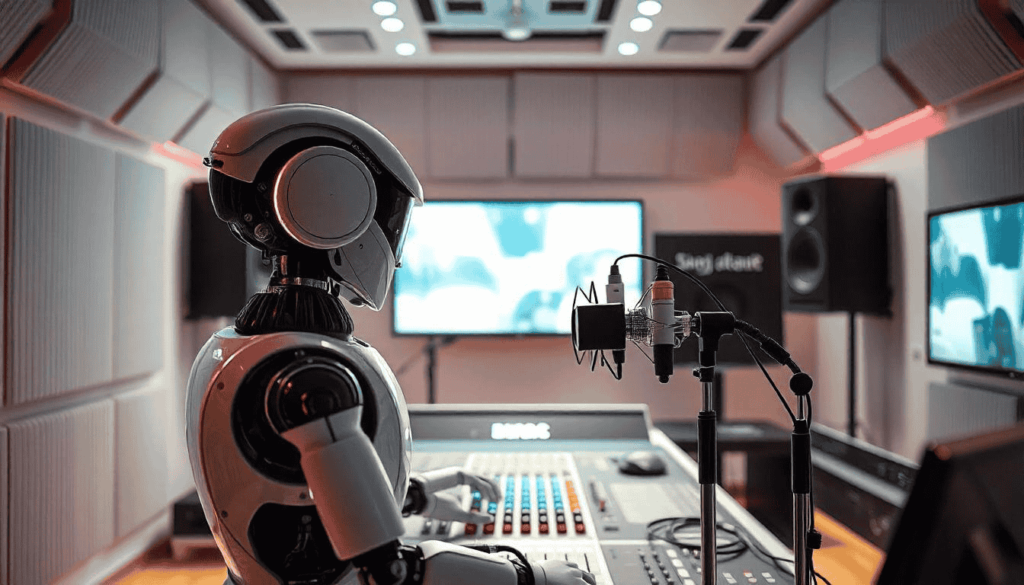
Human creativity remains essential in entertainment. Humor, dramatic timing, character personality, and cultural references often require thoughtful adaptation. AI should therefore be considered a supporting production technology rather than a guaranteed replacement for professional artistic performance.
The Role of AI Dubbing in Education
Educational institutions and online learning platforms increasingly serve students from diverse linguistic backgrounds. Language differences can create difficulties when learners attempt to understand complex concepts, even when they have access to subtitles. Dubbed educational videos can provide an additional way to absorb information.
The wider technological discussion associated with deepseekplay com demonstrates why language accessibility deserves attention in digital education. A mathematics instructor, for example, could adapt recorded lessons into several languages while retaining the original diagrams and visual explanations. Corporate training providers could also use localized videos to deliver consistent instructions to employees working across different countries.
Educational dubbing requires careful review to ensure that translated terminology, numerical information, and instructional explanations remain accurate. Incorrect translations could confuse learners or undermine the effectiveness of training materials.
AI Video Dubbing for Business and Digital Marketing
Businesses operating internationally need communication strategies that reflect the preferences of different customer groups. A promotional video that performs well in one country may struggle in another if viewers cannot understand its language or cultural references. AI dubbing can support localization by making product demonstrations, advertisements, and brand messages available in multiple languages.
For example, an e-commerce company introducing a product to new markets could adapt its existing promotional videos into relevant regional languages. Instead of recording entirely new presentations, the company could retain its original visuals and customize the spoken message. Marketing teams can then test localized campaigns and evaluate their performance before committing additional resources.
Multilingual videos may also support customer education, product onboarding, and after-sales assistance. Clear communication can help customers understand product features and make more informed purchasing decisions.
The Importance of Lip Synchronization
Lip synchronization is an emerging component of advanced AI video dubbing. When translated dialogue differs significantly from the original speech, a speaker’s visible mouth movements may not match the generated audio. This mismatch can distract viewers and reduce the authenticity of the viewing experience.
AI-assisted lip synchronization attempts to adjust visual mouth movements or audio timing to create better alignment. The technology can be particularly useful for presenter-led videos, interviews, and entertainment productions. However, modifying a person’s appearance or voice introduces additional ethical considerations.
Organizations should obtain appropriate permission before digitally altering identifiable individuals. Transparent production practices can help maintain audience trust while allowing responsible experimentation with advanced localization technologies.
Challenges and Limitations of AI Video Dubbing
Although AI dubbing continues to improve, it is not without limitations. Automated translation systems can misunderstand regional expressions, informal language, technical vocabulary, and conversations involving multiple speakers. Background noise and unclear recordings may also affect transcription accuracy, creating errors that continue throughout the production process.
Readers interested in deepseekplay com should understand that successful AI-assisted content production depends on more than technological convenience. Reviewing translated scripts, checking pronunciation, and evaluating final audio quality remain necessary steps.
Voice ownership is another important consideration. Recreating a person’s recognizable voice without permission may raise privacy, intellectual property, and ethical concerns. Businesses and creators should use authorized recordings and maintain appropriate controls over uploaded media and generated audio.
Best Practices for Creating High-Quality AI-Dubbed Videos
Producing effective multilingual content requires planning, suitable source material, and careful quality assessment. Creators should begin by identifying their intended audience and determining which languages are most relevant to their content strategy.
The following practices can help improve production quality:
-
Use clear original audio with minimal background noise.
-
Review translated scripts for accuracy and cultural relevance.
-
Obtain permission before replicating recognizable voices.
-
Check audio timing, pronunciation, and emotional consistency.
-
Test localized videos with native-language speakers.
A thoughtful production workflow can prevent avoidable errors and help maintain the quality of the original content. Rather than relying entirely on automated results, creators should treat AI dubbing as one component of a broader localization strategy.
The Impact of AI Dubbing on Content Discoverability
Multilingual content can support digital discoverability by making videos relevant to audiences searching in different languages. However, generating translated audio alone does not guarantee improved search rankings or audience growth. Creators should also consider localized video titles, descriptions, captions, and other contextual information.
Search behavior varies across regions, and direct translations may not always reflect the terminology that local audiences use. Researching regional search intent can help creators develop more relevant content descriptions. Combining multilingual audio with thoughtful search optimization may improve accessibility while supporting a stronger international content presence.
Monitoring audience engagement across language versions can also help creators refine their publishing strategies and identify potential growth opportunities.
The Future of AI Video Dubbing and Global Communication
The future of AI video dubbing is likely to involve improvements in emotional expression, contextual translation, regional pronunciation, and audiovisual synchronization. As artificial intelligence continues to develop, multilingual production workflows may become more accessible to individual creators, educational institutions, and international businesses.
Future systems could offer greater control over speaking styles and cultural adaptation, helping production teams maintain the personality of original content across languages. Real-time speech translation may also create new opportunities for international events, virtual presentations, and live digital communication.
However, responsible innovation will remain important. The long-term success of AI dubbing depends on balancing technological efficiency with accuracy, consent, transparency, and respect for human creativity.
Conclusion
AI video dubbing is transforming the way digital content reaches global audiences. By combining speech recognition, automated translation, voice synthesis, and synchronization technologies, it offers practical opportunities for multilingual communication across entertainment, education, business, and digital marketing.
The growing interest in deepseekplay com provides an opportunity to examine how emerging artificial intelligence technologies are influencing international content strategies. While AI-assisted dubbing can reduce production challenges and support wider accessibility, maintaining translation accuracy, cultural sensitivity, and ethical standards remains essential.
As multilingual video technology continues to evolve, creators and businesses that combine artificial intelligence with thoughtful human supervision will be better positioned to develop meaningful content for diverse audiences and build a sustainable international digital presence.

