

Farming has always depended on close observation. For generations, farmers walked their fields every morning, checked the color of the leaves, felt the soil in their hands and judged by experience when to water, spray or harvest. That knowledge still matters, but the size of today’s farms, rising labour costs and an unpredictable climate have made it hard to watch every acre closely. This is where drones have stepped in. Something that looked like a gadget for hobbyists and filmmakers a decade ago is now one of the most useful tools in modern agriculture.
Agricultural drones now do far more than take aerial photos. They spray crops, map fields, find pest attacks early, estimate yields and even help with insurance claims after crop damage. Governments, agri-tech startups and farmer cooperatives are putting money into this technology because it saves time, water, chemicals and money. Readers who follow technology trends on deepseekplay com may already have noticed how quickly drones have moved from trial projects into everyday farm work across many countries.
This article looks at how drone technology works in agriculture, where it is used, what benefits and limits it has, and how farmers can start using it. Whether you farm, study agriculture, run an agri-business or simply care about the future of food, this guide gives you a practical picture of how drones are changing the way crops are grown.
What Agricultural Drones Actually Are
An agricultural drone is an unmanned aerial vehicle built for farm work. Unlike a basic camera drone, it usually carries special equipment: a liquid tank and spray nozzles for crop protection, multispectral or thermal cameras for crop health analysis, or seed hoppers for broadcasting seeds. Most farm drones are multirotor machines with four, six or eight propellers, which lets them hover steadily and fly low over crops. Fixed-wing drones are also used, mainly for mapping very large areas, because they can stay in the air longer and cover more ground in one flight.
What makes these machines powerful is the software behind them. Modern farm drones use GPS, and often RTK positioning, to fly pre-planned routes accurately, sometimes to within a few centimetres. The farmer or operator draws the field boundary on a tablet or smartphone, sets the spray rate or flight height, and the drone flies the mission by itself. Many models also have obstacle-avoidance sensors and terrain-following radar, so they can keep a steady height over uneven land. Technology explainers on platforms like deepseekplay com often point out that the real value of a drone lies less in the flying machine and more in the data and precision it brings to everyday farm decisions.
How Drones Are Used in Modern Farming
Precision Spraying of Fertilisers and Pesticides
Spraying is the most common use of drones on farms today, especially in Asia. A spray drone can treat an acre of crops in a matter of minutes, while manual spraying with a backpack sprayer can take hours. The drone’s downward airflow pushes the spray into the crop canopy, so droplets reach both the top and underside of leaves. Because the drone sprays only where it is programmed to, chemical waste goes down and the farmer uses far less water than with traditional methods.
There is also a major health benefit. Manual spraying exposes farm workers directly to pesticides, which can cause skin problems, breathing trouble and long-term illness. With a drone, the operator stands at a safe distance and controls the whole operation from the edge of the field. In India, for example, the government has encouraged drone spraying through programs that train rural women and self-help groups as drone pilots, creating new jobs while cutting chemical exposure for farm workers.
Crop Health Monitoring and Field Mapping
Drones fitted with multispectral cameras can see things the human eye cannot. Healthy plants reflect light differently from stressed plants, and special imaging techniques turn these differences into colour-coded maps of the field. A farmer looking at such a map can quickly spot patches where crops are suffering from nutrient shortage, water stress, disease or pest attack, often days or weeks before visible symptoms appear on the ground.
Take a sugarcane or wheat farmer with fifty acres. Walking the entire field to look for early signs of fungal infection would take a long time and could still miss problem areas. A short drone flight can capture the whole field, and the resulting map shows exactly which sections need attention. The farmer can then treat only those zones instead of spraying the entire field, saving money and reducing chemical use.
Seeding, Irrigation Planning and Yield Estimation
Some drones can broadcast seeds, which is useful for crops like rice, cover crops and pasture grasses, and for reforestation on hard-to-reach land. Drones are also used to study field slopes and drainage patterns, which helps farmers plan irrigation systems and find places where water collects or runs off. Thermal cameras can show areas of the field that are too dry or too wet, so irrigation can be adjusted.
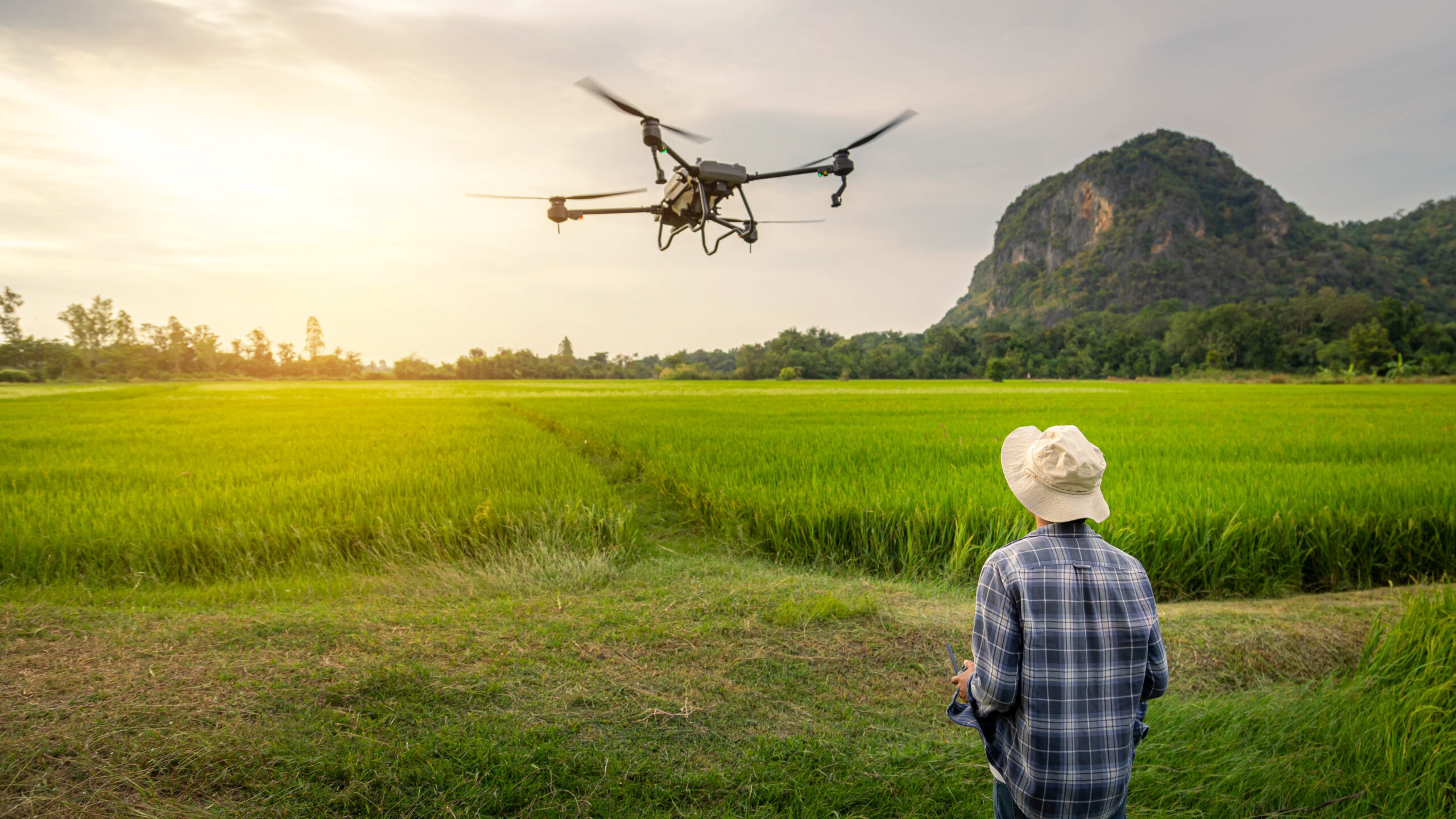
Closer to harvest, drone imagery helps estimate yields by counting plants, measuring canopy cover and comparing crop growth across seasons. This information helps farmers plan storage, labour and sales in advance. As covered in agri-tech discussions on deepseekplay com, combining drone data with weather forecasts and soil test results is turning guesswork into planned, measurable farming.
Key Benefits of Using Drones in Agriculture
The biggest advantage of drones is efficiency. Tasks that once took days can now be finished in hours, and fewer workers are needed for spraying and scouting. This matters a lot in regions where farm labour is getting scarcer and more expensive as young people move to cities for work. Drones also make it possible to work on fields that are hard to reach by tractor, such as waterlogged paddy fields, hilly terrain or tall crops like sugarcane and maize.
The main benefits farmers usually report can be summed up like this:
- Major savings in water use during spraying compared with conventional methods
- Less chemical waste because inputs are applied only where they are needed
- Lower health risks for workers who no longer handle pesticides directly
- Early detection of pests, disease and nutrient problems through aerial imaging
- Better record-keeping, since every flight produces data that can be stored and compared
Beyond these practical gains, drones support sustainable farming. When farmers use fewer chemicals and less water, less runoff reaches rivers and groundwater, and soil health is easier to protect. Buyers and food companies increasingly want to know how their food is produced, so the detailed records drones create can also help farmers meet certification and traceability requirements.
Comparing Traditional Methods with Drone-Based Farming
To see the difference drones make, it helps to compare common farm tasks done by hand or with conventional machinery against the same tasks done with drones. The table below gives a general comparison based on typical field experience. Actual results vary depending on crop type, field size and drone model.
| Farm Task | Traditional Method | Drone-Based Method | Key Advantage |
|---|---|---|---|
| Pesticide spraying | Backpack or tractor sprayer, slow and labour-intensive | Automated aerial spraying covering an acre in minutes | Faster work and much lower water use |
| Crop health scouting | Walking the field and checking plants by eye | Multispectral imaging of the whole field in one flight | Problems spotted before symptoms show |
| Field mapping | Manual surveys or satellite images with limited detail | High-resolution maps captured on demand | Accurate, up-to-date field data |
| Seeding | Manual broadcasting or ground machinery | Aerial seed spreading in difficult terrain | Reaches waterlogged or hilly land |
| Worker safety | Direct exposure to chemicals during spraying | Operator controls from a safe distance | Fewer health risks for farm workers |
| Damage assessment | Physical inspection after storms or pest attacks | Quick aerial survey with photo evidence | Faster insurance and relief claims |
The comparison shows that drones do not replace farmers’ knowledge. They extend it. The farmer still decides what to grow, when to irrigate and how to respond to a problem, but the drone gives faster and more accurate information to base those decisions on.
Challenges and Limitations Farmers Should Know
Drones bring real benefits, but they come with challenges too. The first is cost. A good spray drone with batteries, chargers and software can be a big investment for a small or marginal farmer. That is why many farmers prefer drone-as-a-service models, where a trained operator or a cooperative brings the drone and charges per acre. Custom hiring centres, farmer producer organisations and agri-startups are making this model more common, so small farmers can use drones without buying one.
Regulation is another factor. Most countries require drone registration, pilot training or certification, and approval to fly in certain areas. In India, drone use falls under national drone rules, and only specific pesticides and formulations approved for aerial application should be sprayed by drone. Battery life is also a practical limit: most spray drones fly for only a short time per battery, so operators need several charged batteries to cover large fields. Weather matters too, because strong winds or rain can make spraying unsafe or ineffective. Many readers of deepseekplay com ask whether drones suit every farm, and the honest answer is that they work best when matched to the right crop, field size and local support system.
There is also a skills gap. Flying a drone safely, planning missions, maintaining equipment and reading multispectral maps all need training. Without proper knowledge, a farmer may misread data or spray at the wrong rate, which can cause crop damage or wasted inputs. That is why training programs and local service networks are just as important as the drones themselves.
How Farmers Can Get Started with Drone Technology
For a farmer curious about drones, the best first step is not buying a machine but trying the service. Hiring a local drone operator for one spraying or mapping job shows clearly what the technology can and cannot do on your own land. During this trial, it is worth watching how much time is saved, how evenly the spray is applied and how the crop responds over the following weeks.

Farmers who want to go further can follow a simple path:
- Contact local agricultural departments, universities or farmer producer organisations about drone training and subsidies
- Compare drone service providers in your area and check that they have certified pilots
- Start with one task, such as spraying or crop scouting, before expanding to other uses
- Keep records of costs, yields and input use to measure the real return on investment
Learning resources also play an important role. Online platforms, agricultural extension services and tech-focused websites like deepseekplay com can help farmers understand new developments, compare equipment and learn from other growers’ experiences. The more informed a farmer is, the better they can judge which drone solution actually fits their farm.
The Future of Drones in Agriculture
The next stage of agricultural drones will be shaped by artificial intelligence, better batteries and connected farm systems. AI-powered image analysis is already improving, so drones can identify specific weeds, diseases and pests automatically instead of only showing general stress patterns. In the coming years, we can expect drones that detect a problem and then decide on and carry out the right treatment, spraying individual plants or small patches instead of whole fields.
Drone swarms, where several drones work together on one large field, are being tested to cover big areas faster. Drones are also being linked with soil sensors, weather stations and farm management software, creating a connected system where every piece of data feeds into better decisions. For developing agricultural economies, drones offer a chance to skip older, costly technologies and move straight to precision farming. As updates shared on deepseekplay com regularly show, the pace of innovation in this field is fast, and what seems advanced today may be standard practice within a few seasons.
Conclusion
Drone technology is no longer a futuristic idea in agriculture. It is a practical tool that is already helping farmers save time, cut costs, protect their health and grow crops more sustainably. From precision spraying and crop health monitoring to seeding, mapping and yield estimation, drones give farmers an aerial view and a level of precision that was once out of reach for most growers.
The technology still has limits. Upfront costs, regulations, battery life and the need for skilled operators are real concerns, but service models, government support and training programs are steadily making drones easier to access, even for small farmers. The key is to see drones as a support for farming knowledge, not a replacement for it.
For anyone involved in agriculture, now is a good time to learn about drones, try a service on a small scale and see how the technology fits local conditions. Following trusted sources like deepseekplay com can help you stay updated as the technology changes. Farms that combine traditional experience with smart tools like drones will be better prepared to feed a growing population while protecting the land for future generations.

