

The digital world is undergoing a significant transformation as technology moves beyond traditional screens and enters three-dimensional environments. Spatial computing represents an important development in this evolution, allowing individuals to interact with digital information in ways that feel more natural, immersive, and intuitive. Instead of relying exclusively on keyboards, touchscreens, and conventional displays, users can engage with virtual objects through gestures, voice commands, eye movements, and physical actions. This advancement is creating new possibilities across entertainment, healthcare, education, manufacturing, retail, and professional collaboration.
In 2026, growing interest in immersive technologies has encouraged businesses and developers to explore intelligent digital environments that combine physical surroundings with virtual experiences. Discussions surrounding deepseekplay com offer an opportunity to examine how emerging technologies, artificial intelligence, and interactive computing are influencing modern digital lifestyles. From virtual workspaces to interactive educational simulations, spatial computing is gradually changing how people understand, access, and use digital information.
The significance of this technology extends beyond visual innovation. Spatial computing introduces a more contextual approach to digital interaction, enabling systems to understand surroundings, recognize objects, and respond to human movements. As hardware becomes more capable and software continues to improve, immersive environments could become increasingly relevant to everyday activities and professional operations.
Understanding the Concept of Spatial Computing
Spatial computing refers to a technological approach that enables digital systems to understand, interpret, and interact with three-dimensional physical environments. Unlike conventional computing, where users primarily interact with information displayed on flat screens, spatial computing integrates digital elements into the surrounding environment. It uses sensors, cameras, artificial intelligence, computer vision, and advanced processing systems to establish meaningful connections between physical and virtual spaces.
For example, an interior designer can position virtual furniture inside a real living room before purchasing physical products. Similarly, an engineer can examine a three-dimensional machine model without requiring a physical prototype. These applications demonstrate how spatial computing can improve visualization, decision-making, and user engagement. The technology essentially transforms physical surroundings into interactive digital interfaces, reducing the limitations associated with traditional computing methods.
How Spatial Computing Works in Modern Environments
Spatial computing operates through several interconnected technologies that continuously collect and interpret information about the user’s surroundings. Cameras capture visual information, while motion sensors detect movement and orientation. Depth sensors, where available, help determine distances between objects, allowing digital systems to construct representations of physical environments. Advanced algorithms process this information to position virtual elements accurately and maintain their stability as users move.
The integration of artificial intelligence further improves the ability of spatial computing systems to recognize patterns, understand user intentions, and respond appropriately. Within broader technology discussions involving deepseekplay com, these developments demonstrate the importance of combining intelligent software with immersive hardware. A spatial computing application may recognize a physical desk, identify available surfaces, and display digital documents in positions that remain consistent as the user changes perspective.
The Evolution Beyond Traditional Digital Interfaces
Traditional digital interfaces have served businesses and consumers effectively for decades. However, conventional screens restrict interactions to two-dimensional environments, often requiring users to navigate multiple windows, menus, and applications. Spatial computing introduces an alternative approach by distributing digital information throughout an interactive three-dimensional space.
Instead of switching between multiple browser tabs, professionals could arrange documents, presentations, analytical dashboards, and communication tools around a virtual workspace. Designers could manipulate three-dimensional models directly rather than adjusting them through complicated menus. Although traditional devices remain essential for everyday productivity, spatial computing provides additional opportunities where depth perception, physical interaction, and environmental awareness offer meaningful advantages. This evolution represents an expansion of computing capabilities rather than an immediate replacement for existing technology.
Key Technologies Driving Spatial Computing
The growth of spatial computing depends on several technological developments working together. Extended reality provides immersive environments, artificial intelligence enables intelligent interactions, and computer vision helps systems interpret physical surroundings. Advances in semiconductor technology and wireless connectivity also contribute to smoother experiences by improving processing capabilities and reducing delays.
The primary technologies supporting spatial computing include:
-
Augmented reality for integrating virtual objects into physical surroundings.
-
Virtual reality for creating fully immersive digital environments.
-
Mixed reality for interactive connections between physical and virtual elements.
-
Artificial intelligence for contextual understanding and intelligent responses.
-
Computer vision for object recognition and environmental mapping.
These technologies collectively support applications that can understand physical spaces and respond to user actions. Their continued development is helping make spatial experiences more practical across different industries.
The Role of Artificial Intelligence in Spatial Experiences
Artificial intelligence plays an increasingly important role in making spatial computing more responsive and personalized. Without intelligent processing, immersive systems would have limited abilities to interpret complex environments or understand natural human behavior. AI algorithms can help identify objects, recognize gestures, interpret voice commands, and determine how digital content should appear within specific physical settings.
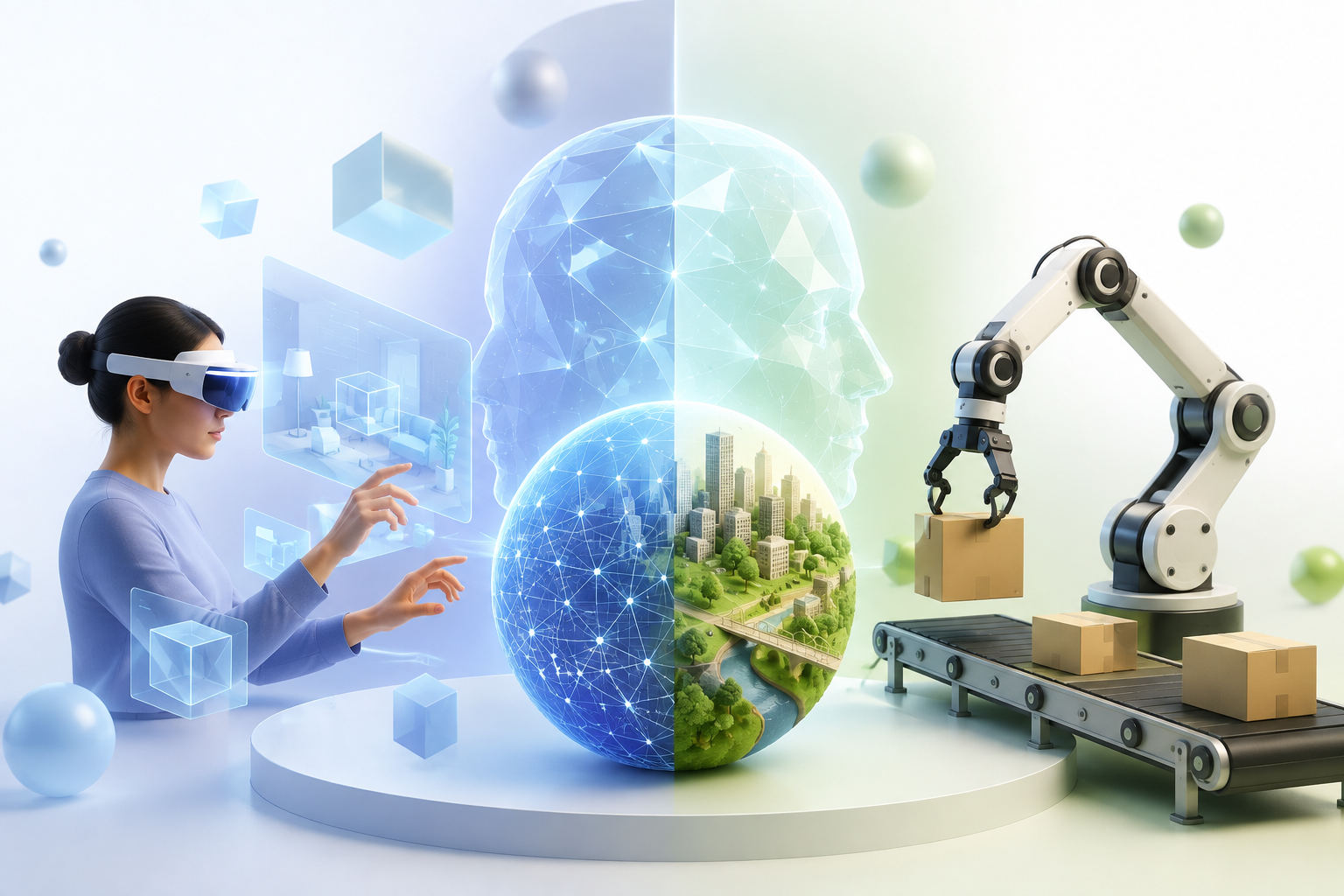
The relationship between artificial intelligence and spatial computing is particularly relevant when examining technology trends associated with deepseekplay com. Imagine wearing an immersive device while repairing household equipment. An AI-powered assistant could potentially recognize the equipment, retrieve relevant instructions, and display contextual guidance within the user’s field of vision. However, reliable implementation requires accurate information, appropriate safety measures, and continuous testing. This combination of intelligence and environmental awareness could make digital assistance more accessible and useful.
Spatial Computing and the Future of Digital Entertainment
Entertainment is among the most visible areas experiencing the influence of spatial computing. Conventional entertainment platforms primarily deliver content through televisions, smartphones, and computer monitors. Immersive technologies introduce alternative formats that allow audiences to experience digital content from different perspectives and participate more actively in virtual environments.
Gaming provides a particularly compelling example. Players can explore simulated landscapes, interact with virtual characters, and manipulate digital objects through physical movements. Spatial entertainment also creates opportunities for interactive storytelling, immersive concerts, virtual exhibitions, and three-dimensional cinematic experiences. Rather than simply watching an event unfold, audiences may become participants within carefully designed digital environments. These experiences can establish stronger emotional connections while introducing new creative opportunities for developers, filmmakers, musicians, and entertainment businesses.
Transforming Education Through Immersive Learning
Education is another sector where spatial computing offers considerable potential. Traditional learning methods frequently depend on textbooks, presentations, diagrams, and classroom demonstrations. Although these approaches remain valuable, certain subjects become easier to understand when students can visualize complex concepts in three dimensions. Immersive learning environments allow students to explore scientific structures, historical settings, geographical landscapes, and engineering models interactively.
For instance, medical students can examine detailed anatomical representations, while architecture students can explore virtual building designs from different angles. Discussions about deepseekplay com and emerging digital technologies highlight how immersive experiences could support more engaging educational approaches. Nevertheless, effective adoption depends on affordability, accessibility, curriculum integration, and educational outcomes. Spatial computing should complement qualified teachers and established learning methods rather than replace essential human guidance.
Spatial Computing Applications Across Major Industries
Different industries are exploring spatial computing according to their operational requirements. Businesses can use immersive environments to improve visualization, support workforce training, enhance customer experiences, and simplify complex processes. The following table illustrates several practical applications and their potential advantages.
| Industry | Spatial Computing Application | Potential Benefit |
|---|---|---|
| Healthcare | Interactive anatomical models | Improved medical visualization |
| Education | Immersive learning simulations | Greater conceptual understanding |
| Retail | Virtual product demonstrations | More informed purchasing decisions |
| Manufacturing | Interactive equipment training | Improved operational preparedness |
| Real Estate | Three-dimensional property tours | Enhanced property visualization |
| Entertainment | Immersive gaming experiences | Increased audience engagement |
| Architecture | Virtual building walkthroughs | Better design evaluation |
| Corporate Businesses | Interactive digital workspaces | Enhanced professional collaboration |
These applications demonstrate the flexibility of spatial computing. Its effectiveness ultimately depends on addressing genuine user requirements rather than introducing immersive features solely for technological novelty.
Revolutionizing Healthcare and Medical Training
Healthcare professionals often work with complex anatomical information that can be difficult to interpret through conventional two-dimensional displays. Spatial computing provides opportunities to visualize medical structures, examine educational models, and conduct simulated training exercises within immersive environments. These capabilities may help medical students and healthcare professionals develop a stronger understanding of spatial relationships between anatomical structures.
Another promising application involves rehabilitation and patient education. Interactive environments may support selected therapeutic activities under professional supervision, while immersive visualizations could help patients understand certain medical procedures. However, healthcare applications require rigorous validation, appropriate regulatory compliance, and strong data protection measures. Spatial computing cannot independently guarantee better clinical outcomes, and its effectiveness depends on professional oversight, evidence-based implementation, and the suitability of individual applications.
Enhancing Retail and Online Shopping Experiences
Online shopping has transformed consumer behavior by making products accessible without requiring physical store visits. However, customers often experience uncertainty about product dimensions, appearance, and suitability. Spatial computing can address some of these challenges by allowing shoppers to visualize products within their own environments before making purchasing decisions.
Furniture retailers, for example, can provide augmented reality experiences that help customers evaluate how sofas, tables, or decorative items might look inside their homes. Fashion and accessories businesses can experiment with virtual product previews, while automotive companies can develop interactive vehicle demonstrations. These developments reflect the broader digital transformation discussed in relation to deepseekplay com, where technology increasingly emphasizes contextual experiences. Businesses adopting these solutions must prioritize accurate product representations, convenient interfaces, and meaningful customer benefits to establish trust.
Creating More Collaborative Digital Workspaces
Remote work and geographically distributed teams have encouraged businesses to explore new collaboration methods. Video conferencing and cloud-based productivity tools remain essential, but they sometimes struggle to reproduce the experience of working together in a shared physical environment. Spatial computing introduces possibilities for virtual meeting rooms, collaborative design spaces, and interactive presentations.
Team members working from different locations could examine the same three-dimensional product model, discuss modifications, and visualize proposed improvements within a shared digital environment. Architects, engineers, and creative professionals may particularly benefit from collaboration that involves complex visual information. However, immersive workspaces must demonstrate practical advantages over existing communication tools. Device comfort, connectivity requirements, employee preferences, and software compatibility will influence whether these environments become widely adopted.
The Importance of Spatial Computing Hardware
Hardware development remains fundamental to the effectiveness of immersive digital experiences. Spatial computing devices require capable processors, reliable sensors, high-quality displays, and efficient power management. These components work together to create responsive environments while maintaining visual clarity and accurate motion tracking.
Head-mounted displays, augmented reality glasses, and compatible mobile devices represent different approaches to delivering spatial experiences. Premium headsets can provide highly immersive environments, while smartphones offer more accessible forms of augmented reality. The industry continues to face challenges related to device weight, battery duration, manufacturing costs, and long-term comfort. As hardware designs improve, spatial computing could become more suitable for everyday activities. However, widespread adoption will depend on balancing technical performance with affordability and practical usability.
How Spatial Computing Supports Smart Cities
Smart cities rely on connected technologies to improve infrastructure planning, transportation systems, public services, and resource management. Spatial computing can complement these initiatives by enabling urban planners to visualize proposed developments within interactive digital models. Three-dimensional representations of buildings, roads, and public spaces may help decision-makers evaluate infrastructure changes before physical construction begins.
Potential applications also include interactive navigation, virtual tourism experiences, and infrastructure maintenance assistance. For example, visitors could access contextual information about historical landmarks through augmented reality interfaces. Municipal teams could use spatial visualizations to examine infrastructure layouts and identify maintenance requirements. These applications must account for public safety, accessibility, privacy, and the reliability of underlying geographical information. Responsible implementation could make urban digital services more intuitive and informative.
Privacy and Security Challenges in Spatial Computing
Spatial computing devices frequently depend on cameras, microphones, motion tracking, and environmental mapping. While these technologies enable immersive experiences, they can also collect sensitive information about users and their surroundings. Environmental data may reveal details about private homes, workplaces, personal belongings, and physical activities.

As technological discussions surrounding deepseekplay com continue to develop, privacy remains an essential consideration for responsible innovation. Developers must establish clear data collection practices, implement appropriate security safeguards, and provide meaningful controls over sensitive information. Users should understand what information devices collect, how it is processed, and whether it is shared with external services. Transparent communication and responsible data management are necessary to build confidence in spatial computing applications. Businesses must also consider the privacy of individuals who may appear within a device’s surrounding environment without actively using the technology themselves.
Accessibility and Inclusive Spatial Design
Spatial computing introduces opportunities to create digital experiences that accommodate different user needs. Voice controls, customizable interfaces, adjustable text sizes, and alternative navigation methods may help individuals who encounter difficulties with conventional devices. Immersive environments could also support different learning preferences and provide flexible ways to access information.
However, spatial computing can introduce additional accessibility barriers. Some individuals may experience motion sickness, visual discomfort, sensory overload, or difficulties using gesture-based interfaces. Developers should therefore consider alternative interaction methods and allow users to customize their experiences. Accessibility must be incorporated throughout the design process instead of being treated as an optional feature. Inclusive spatial environments should enable participation without requiring every user to interact with technology in exactly the same way.
The Growing Importance of Spatial User Experience Design
Designing spatial interfaces requires a different approach from developing conventional websites or mobile applications. Designers must consider depth, distance, movement, environmental lighting, and the physical position of digital objects. An interface that appears visually attractive may still become uncomfortable if users must repeatedly move their heads or perform unnecessary gestures.
Effective spatial user experience design emphasizes simplicity, predictable interactions, readable information, and comfortable navigation. Digital objects should appear in appropriate locations without overwhelming the surrounding environment. Developers must also consider how users transition between immersive applications and physical activities. Successful interfaces should reduce unnecessary complexity and allow individuals to focus on their intended tasks. As spatial computing matures, user experience specialists will play an increasingly important role in determining whether immersive applications offer lasting practical value.
Major Spatial Computing Trends in 2026
The spatial computing landscape in 2026 reflects growing interest in practical applications, intelligent assistance, and improved interoperability. Developers are exploring methods that allow immersive experiences to become more responsive while reducing unnecessary complexity. Businesses are also evaluating whether spatial technology delivers measurable improvements in customer experiences, professional productivity, and operational efficiency.
Important developments shaping the industry include:
-
Greater integration of conversational AI within immersive environments.
-
Continued development of lightweight wearable computing devices.
-
Increased attention to enterprise training and industrial applications.
-
Growing emphasis on secure environmental data management.
-
Improved compatibility between immersive software and existing digital systems.
These trends suggest that spatial computing is progressing beyond experimental demonstrations toward applications designed around specific professional and consumer requirements.
Challenges Affecting Mainstream Spatial Computing Adoption
Despite its potential, spatial computing faces several obstacles that influence mainstream adoption. Advanced devices can remain expensive, limiting accessibility for individuals, educational institutions, and smaller businesses. Developing high-quality immersive applications may also require specialized technical expertise, extensive testing, and considerable financial resources.
Physical comfort represents another important challenge. Prolonged headset use can cause fatigue or discomfort for some individuals, while battery limitations can restrict mobility. Software fragmentation may further complicate development when applications must support multiple hardware platforms. Businesses considering spatial computing should evaluate implementation costs alongside realistic benefits. Technology adoption becomes more sustainable when immersive solutions address specific problems more effectively than conventional alternatives.
The Future of Spatial Computing and Digital Innovation
The future of spatial computing will likely involve deeper integration between artificial intelligence, wearable devices, and intelligent digital environments. As systems become more capable of interpreting physical surroundings, users may encounter increasingly contextual forms of digital assistance. Virtual objects could become easier to manipulate, while immersive interfaces may support more natural communication between individuals and computing systems.
Future discussions about deepseekplay com can provide a useful framework for exploring these wider developments without assuming that any particular platform offers unverified spatial computing capabilities. The long-term success of immersive technology will depend on delivering meaningful experiences, maintaining user trust, and ensuring accessibility. Rather than making every digital interaction immersive, developers will need to determine where spatial approaches provide genuine advantages over established technologies.
Conclusion
Spatial computing represents an important evolution in the relationship between humans, digital information, and physical environments. By combining artificial intelligence, computer vision, augmented reality, virtual reality, and intelligent interfaces, it creates opportunities to interact with technology beyond conventional screens. Its potential extends across education, healthcare, entertainment, retail, architecture, manufacturing, and professional collaboration.
The broader technological conversation involving deepseekplay com reflects growing interest in understanding how intelligent and immersive systems may influence future digital experiences. However, successful innovation requires more than advanced visual capabilities. Affordability, accessibility, privacy, comfort, and practical functionality must remain central considerations throughout development.
As spatial computing continues to mature, its greatest contribution may come from making digital information more relevant to the physical world. Businesses and developers that prioritize genuine user requirements, responsible innovation, and meaningful interaction will be better positioned to create immersive experiences that provide lasting value.

